

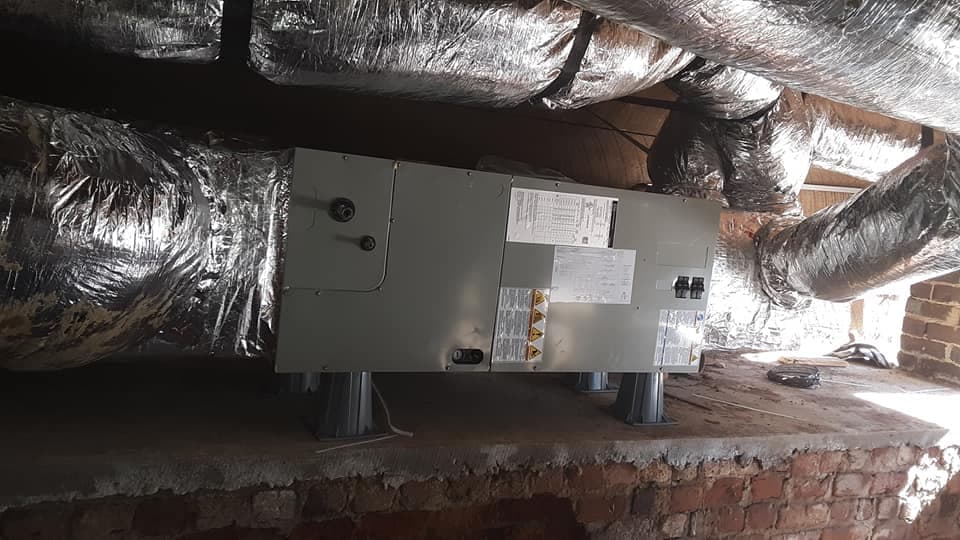
She'd Been on Hold With Another Company for Four Days
Four days. No confirmed appointment. July.
She'd called the number she had — a larger regional company she'd used before, or thought she had. Wasn't sure anymore. The first call got her a callback window. The callback came and she was told someone would call to schedule. The scheduling call came and gave her a two-day window. She stayed home one of those days. Nobody came. Nobody called to say they weren't coming.
Fixed before noon on day five. Capacitor. Common part. Truck stock.
She found us by searching in the middle of the evening — fourth day, still hot, done waiting. Called our number, got a real person, described the problem. We told her we could be there the next morning. She asked if we were sure, in a tone that meant she'd been told things before.
We were there at 8:15.
The house was in WNC, a modest place on a lot with mature trees that should have been helping with the heat load but weren't making enough difference. Four days of July heat inside a house with no working air conditioning will leave a mark — the furniture, the walls, the air itself retains heat. She'd been running box fans and sleeping with the windows open and doing what people do.
The run capacitor on the condenser had failed — the component that provides starting torque to the compressor motor. Without it, the compressor tries to start, can't build the torque it needs, and trips the overload protector. The condenser fan might still spin. The system might hum. But the compressor doesn't run, which means no refrigerant circulation, which means no cooling.
Common failure. More common in July than any other month — the heat accelerates the dielectric breakdown inside the capacitor, and the unit that's been running hard since May runs especially hard in peak summer. We carry a range of capacitor values because it's the single most common part we replace.
The right capacitor for her unit was on the truck. We pulled the failed one, confirmed the specification, installed the replacement, verified compressor start current and operation through a full cycle.
She stood on the porch while we ran the startup check. Asked how it looked. We told her it was running correctly. She went back inside and we heard the thermostat click off — the house had already started responding.
We were there the next morning after she called us. That's the whole thing.

About the Author
Vadim Melnic
Owner & Lead Technician, Fair Air Heating & Cooling·
EPA Section 608 Certified
Vadim has been serving the Asheville area since 2018, specializing in residential HVAC installation, service, and indoor air quality solutions. He founded Fair Air with a simple commitment: honest pricing, quality workmanship, and treating every home like his own.
Keep Reading
Related Articles
The Job That Reminded Us Why We Do This
We'd been at his house for parts of two days. The truck was loaded. The old equipment was in the trailer. We were wrapping up the paperwork, and he asked if we had a minute. Walked us around the side of the house to where he had a half-dozen raised beds tucked into a...
What a Good Day in the Trades Actually Looks Like
That's the whole scorecard. You go home at the end of the day and you think about whether anyone's going to call tomorrow with a problem from something you touched today. If the answer is no, the day worked.
The Leicester Ridge Home That Was Always 5 Degrees Colder Than It Should Be
In January, that house is cold. Not broken-cold. Just cold enough to be miserable — the particular cold that comes in through old windows and settles into floors and makes you reach for another layer even when the thermostat says you shouldn't have to.