

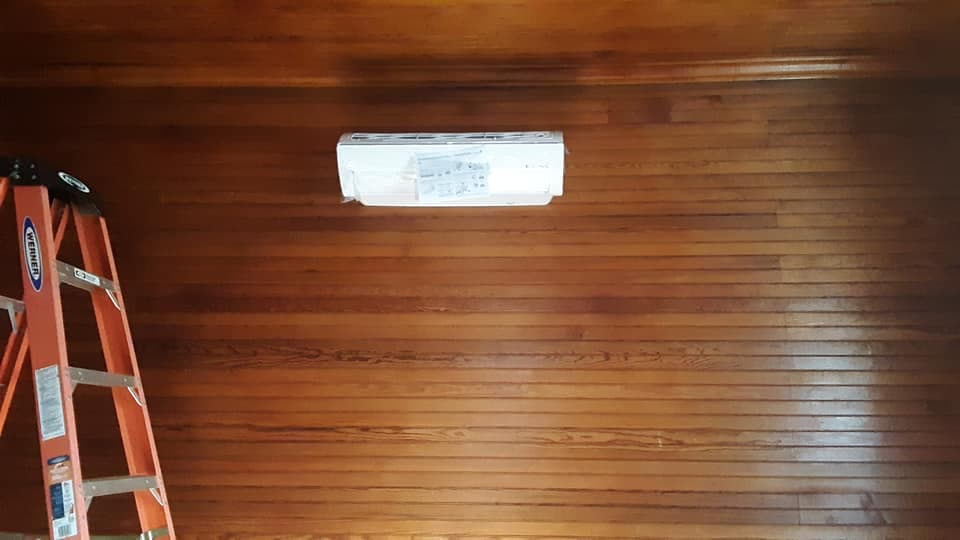
When a Builder Trusts You to Design the System
The system we designed is the right size for that house. We know, because we calculated it.
That sounds like something that should go without saying. It doesn't. Builder-grade HVAC is often sized off a floor plan and a rule of thumb — square footage divided by a number, a stock equipment package chosen from a catalog, installed by whoever was available when the schedule needed it. The system is functional. It conditions air. Whether it's the right system for that specific house on that specific site with that specific orientation and that specific elevation is a question that often doesn't get asked.
We asked it. We had the latitude to.
This family won't deal with a system that was spec'd for a different house. They won't have the upstairs that's always too warm in the afternoon, or the great room that takes two hours to recover after guests come and go, or the master bedroom that runs cold because it was treated the same as every other room in the load calculation when it shouldn't have been.
Those are the complaints we hear from people who bought a house with a system that wasn't designed for their house. The pattern is always the same: the system works, the comfort is just never quite right, and nobody can tell them exactly why.
We started with a room-by-room load calculation. Manual J, done correctly — window area and orientation, insulation values at walls and ceiling and floor, infiltration estimates based on construction type, occupant load, lighting and appliance heat gain. For each room, a number: BTU per hour of heating and cooling load. Those numbers drive equipment selection and duct sizing.
Then the site. The house sits at elevation on a WNC ridgeline. Elevation changes the thermal calculations — at altitude, air is less dense, heat pumps and air conditioners move less mass per cycle, equipment needs to be selected accordingly. The orientation of the structure matters for solar gain. The local microclimate matters for design days. None of that shows up on a floor plan.
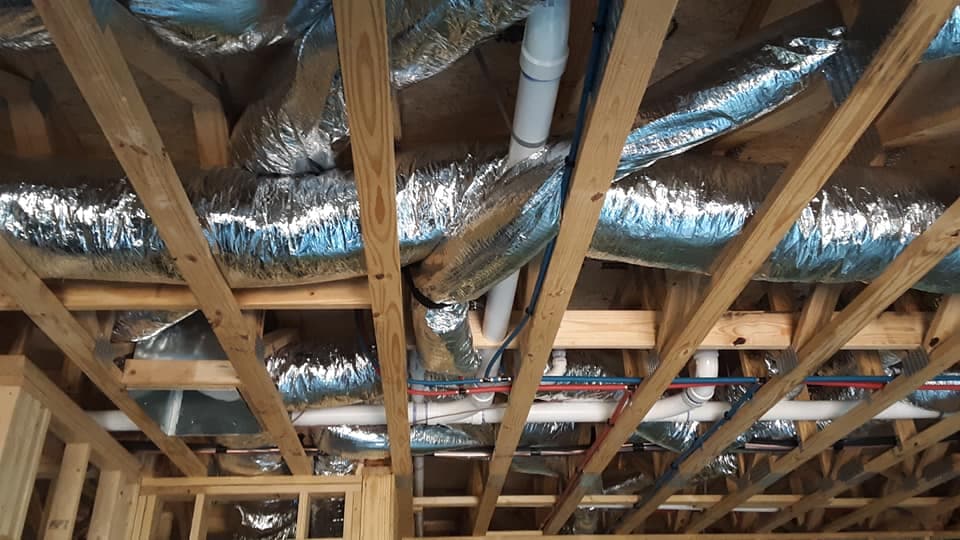
We designed the ductwork before the walls were closed. That's the only way to do it correctly — once the drywall goes up, you're threading through what exists. With open framing, you route for performance: short runs, minimal bends, trunk sizing that maintains velocity through every branch, register placement that puts conditioned air where the load is.
The builder let us work. That was the job.
When you get to design from the beginning, the system can be what it should be — not adapted, not compromised, not a best effort within constraints someone else created. Just right, for that house, for those people.

About the Author
Vadim Melnic
Owner & Lead Technician, Fair Air Heating & Cooling·
EPA Section 608 Certified
Vadim has been serving the Asheville area since 2018, specializing in residential HVAC installation, service, and indoor air quality solutions. He founded Fair Air with a simple commitment: honest pricing, quality workmanship, and treating every home like his own.
Keep Reading
Related Articles
The Job That Reminded Us Why We Do This
We'd been at his house for parts of two days. The truck was loaded. The old equipment was in the trailer. We were wrapping up the paperwork, and he asked if we had a minute. Walked us around the side of the house to where he had a half-dozen raised beds tucked into a...
What a Good Day in the Trades Actually Looks Like
That's the whole scorecard. You go home at the end of the day and you think about whether anyone's going to call tomorrow with a problem from something you touched today. If the answer is no, the day worked.
The Leicester Ridge Home That Was Always 5 Degrees Colder Than It Should Be
In January, that house is cold. Not broken-cold. Just cold enough to be miserable — the particular cold that comes in through old windows and settles into floors and makes you reach for another layer even when the thermostat says you shouldn't have to.