

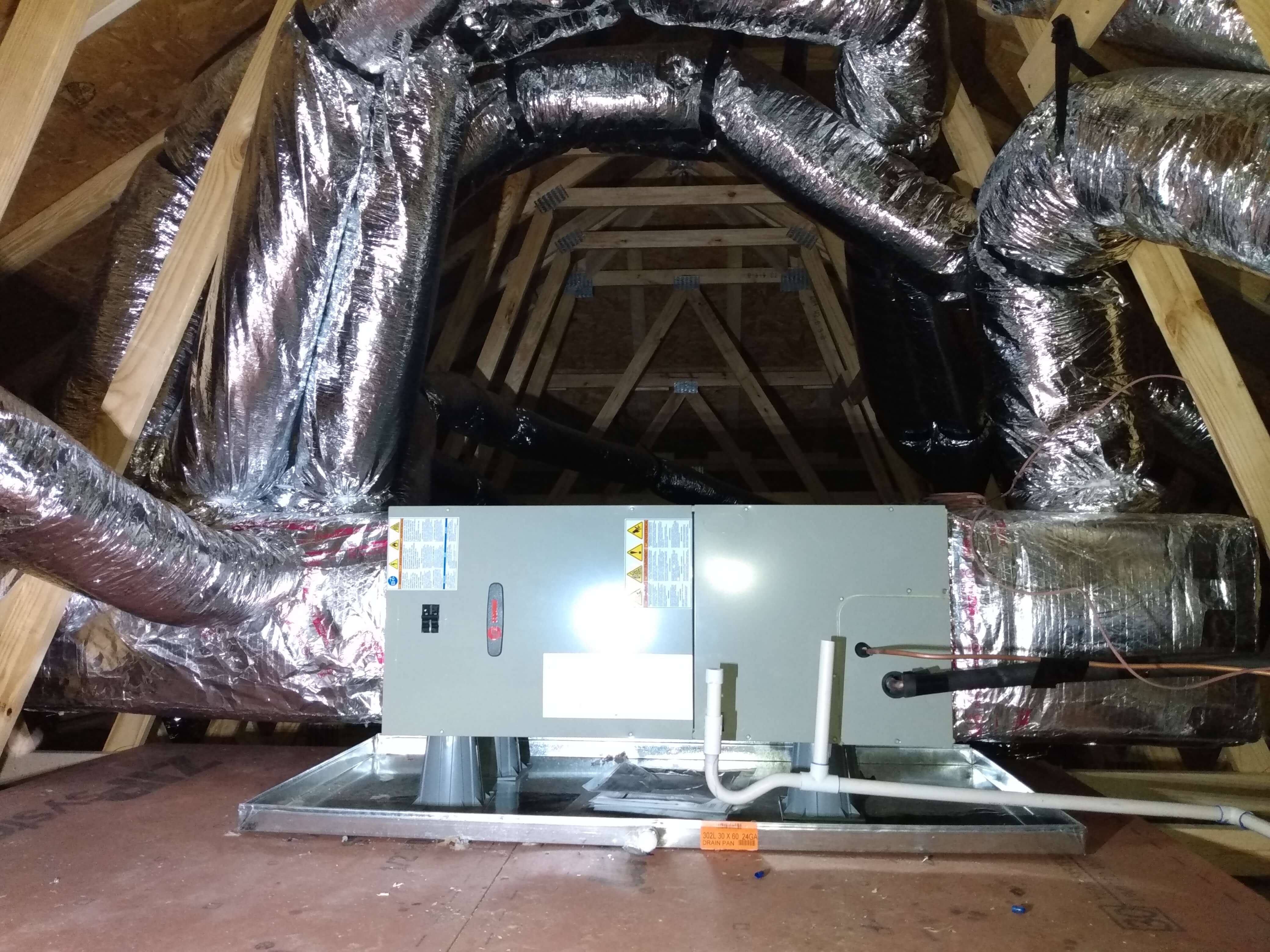
Why Your HVAC System's Size Matters More Than Its Brand
Two houses. Same square footage. Same brand of equipment. Same contractor. One performs correctly. One runs constantly and never quite hits the setpoint on a hot afternoon.
The houses are in Arden, about a mile apart. Both two-story, both built in the same decade, both with similar duct layouts in the same relative position of the system. A neighbor recommended the contractor to the second homeowner after seeing the installation at the first house go smoothly. Same proposal, more or less. Same tonnage.
The second homeowner has been calling for service every summer since. Nothing is ever definitively wrong. The system checks out on a gauge manifold. Refrigerant charge is good. Electrical is fine. It just runs. And runs. And runs. And the house never quite gets to 72 on the hottest days.
The first house doesn't have this problem.
Here's what's different: the first house faces north-south. The second faces east-west. That means the second house has its largest glass area — the living room wall, the back of the kitchen — facing west. Every summer afternoon, from about two o'clock until sunset, that wall is taking direct solar load. Glass transfers heat differently than a framed wall. A west-facing room with a lot of window area can add a significant cooling load that a square-footage-based calculation doesn't capture.
Additionally: the second house has a finished bonus room above the garage. The garage is unconditioned. That floor is sitting over a space that gets extremely hot in summer. Without additional insulation under the bonus room floor, that room has a higher cooling load per square foot than any other room in the house — and it's the room that never gets cool enough, the room the homeowner keeps the door closed on in July.
A proper load calculation — Manual J, done by someone who walks the house and asks questions — would have caught both of these. Orientation, glass area by face, shading, insulation values, and the characteristics of adjacent unconditioned spaces all go into the calculation. The result is a cooling tonnage recommendation that reflects the actual building, not the average building of that square footage.
The contractor who installed both systems used a rule of thumb. One ton per 600 square feet is common. It's not entirely wrong — it lands in the right ballpark for a typical house in a typical climate. But WNC isn't a typical climate, and the variation from house to house here is significant. Ridge properties gain and lose heat differently than valley homes. South-facing lots in the mountains can have a higher winter solar gain that changes the heating calculation. Homes near the French Broad corridor have humidity loads that affect the sizing of dehumidification capacity.
Brand doesn't solve this. A well-made piece of equipment installed in the wrong size for the building will perform poorly. An oversized system short-cycles — it reaches the setpoint quickly, shuts off, and cycles back on before the space has time to dehumidify. The air feels cool but clammy. An undersized system runs constantly and never quite wins on the worst days.
We do Manual J load calculations on every new system we propose. It takes time. It requires walking the house, measuring windows, asking about insulation, noting orientation and any unusual load characteristics. Some contractors skip it. We don't, because the alternative is what happened to the second house in Arden — a correctly installed system that's the wrong size, and a homeowner wondering every summer why it won't cool down.
The brand matters less than you'd think. The calculation is the job.

About the Author
Vadim Melnic
Owner & Lead Technician, Fair Air Heating & Cooling·
EPA Section 608 Certified
Vadim has been serving the Asheville area since 2018, specializing in residential HVAC installation, service, and indoor air quality solutions. He founded Fair Air with a simple commitment: honest pricing, quality workmanship, and treating every home like his own.
Keep Reading
Related Articles
Your New System Isn't Performing the Way It Should — Here's Why
Rooms that were uneven before the installation were still uneven six months later. The system was running, conditioning the house, doing the basic job — but the efficiency improvement the contractor had sold on the front end hadn't materialized. The bills were marginally better,...
Duct Leakage — The Efficiency Problem Hiding in Your Crawl Space
The system is 18 SEER. The house performs like it's 11.
How Refrigerant Actually Works — Explained for People Who Don't Care About Refrigerant
She wanted to understand it. Most people don't ask.