

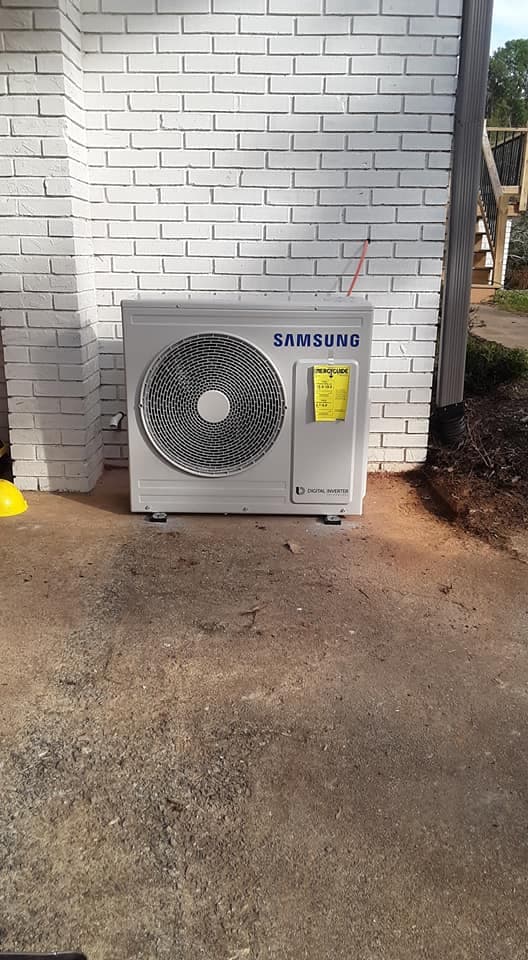
Duct Leakage — The Efficiency Problem Hiding in Your Crawl Space
The system is 18 SEER. The house performs like it's 11.
That gap — seven SEER points — represents real money. It represents conditioned air that never reached a living space. It represents a homeowner who upgraded her equipment and watched the bills and waited for the improvement that didn't fully come.
She lives in a neighborhood outside Fletcher, in a ranch-style home on a crawl space. The home was built in the 1990s. When the old system finally gave out two summers ago, she replaced it with a high-efficiency heat pump — the kind with the Energy Star label, the kind the contractor showed her the SEER rating on when making the case for the upgrade. She asked the right questions. She bought a good system.
What she didn't know was that the duct system running through her crawl space would undermine most of the efficiency gain.
We tested the ducts when she called us for a second opinion on why her bills hadn't changed. The duct leakage test — a process similar to a blower door test but applied specifically to the duct system — pressurizes the ductwork and measures how much air escapes before it reaches the registers. Her system was leaking 28 percent. Of every cubic foot of conditioned air that left her air handler, 28 percent of it went into the crawl.
In a crawl space that isn't conditioned, that's not a small loss. In summer, that air — cooled to 72°F — dumps into a crawl that might be 85°F and humid. The house doesn't benefit from it. The energy to condition it is spent completely. In winter, heated air goes into the ground space under the house instead of into the living room. The system runs longer to compensate, never quite able to satisfy the thermostat efficiently because a significant fraction of what it produces is bypassing the house entirely.
28 percent is on the high side, but it's not exceptional for an older WNC home that's never had a duct test done. Industry estimates put the average residential duct leakage at 20 to 30 percent in homes where the duct system has never been sealed. The ducts were installed, connected loosely at the factory-standard joints, taped with cloth tape that dried out over a decade, and left alone. Nobody measured. The equipment above them has been replaced twice; the duct system running through the crawl has never been touched.
The energy that escapes through duct leakage doesn't show up on any single line item. It shows up as the gap between what your equipment is rated to do and what it actually delivers. An 18 SEER system with 28 percent duct leakage performs like a much less efficient unit. You can't buy your way to efficiency with better equipment if the distribution system is losing a third of its output.
Sealing duct leaks isn't glamorous work. It involves getting into a crawl space, identifying every connection point between sections of flex duct and metal duct, and applying mastic sealant to close the gaps. Mastic is a thick, flexible compound that bonds to metal and cures into a permanent seal — it doesn't dry out, doesn't crack with temperature cycling, doesn't peel. Properly applied, it stays sealed. Every boot, every takeoff, every connection gets treated.
After sealing, her duct leakage tested at 6 percent. The system runs shorter cycles to reach setpoint. The temperature in the back rooms — always slightly cooler than the front — evened out.
Seal the ducts. Then see what the system can actually do.

About the Author
Vadim Melnic
Owner & Lead Technician, Fair Air Heating & Cooling·
EPA Section 608 Certified
Vadim has been serving the Asheville area since 2018, specializing in residential HVAC installation, service, and indoor air quality solutions. He founded Fair Air with a simple commitment: honest pricing, quality workmanship, and treating every home like his own.
Keep Reading
Related Articles
Your New System Isn't Performing the Way It Should — Here's Why
Rooms that were uneven before the installation were still uneven six months later. The system was running, conditioning the house, doing the basic job — but the efficiency improvement the contractor had sold on the front end hadn't materialized. The bills were marginally better,...
How Refrigerant Actually Works — Explained for People Who Don't Care About Refrigerant
She wanted to understand it. Most people don't ask.
The Tighter the House, the More Important Ventilation Becomes
The house was perfectly built. That was the problem.