

How Refrigerant Actually Works — Explained for People Who Don't Care About Refrigerant
She wanted to understand it. Most people don't ask.
By the end of the conversation, standing in her driveway on a warm afternoon in Asheville, she understood why we had to find the leak before we charged anything. Not just that we had to — why. The why is the part that changes how you think about the system you own.
She'd had the system topped off twice before, by two different companies, over five summers. Each time she called because the AC wasn't cooling well. Each time they added refrigerant and it worked for a while. She'd started to think of refrigerant as something you add annually, like oil in a car. She was paying for it and it made the problem go away, so the mental model seemed to fit.
The thing that breaks the model: refrigerant isn't fuel. It doesn't get consumed. A car burns oil slowly because oil is doing lubrication work in a combustion process and a small amount is inevitably lost. Refrigerant does its job by changing state — from gas to liquid and back again — in a closed loop. If the system were perfectly sealed, the same refrigerant charge that was installed on day one would still be in the system after twenty years. Not a molecule less.
If refrigerant is low, it left somewhere. There's a hole.
Here's what the refrigerant is actually doing: it starts as a high-pressure gas leaving the compressor, hot from the compression. It travels to the outdoor unit — the condenser — where it runs through coils and a fan blows air over it. As it releases heat to the outside air, it condenses into a liquid. Still under high pressure, it passes through an expansion device — a metering valve or orifice — which creates a sudden pressure drop. That pressure drop causes the refrigerant to partially vaporize and drop dramatically in temperature.
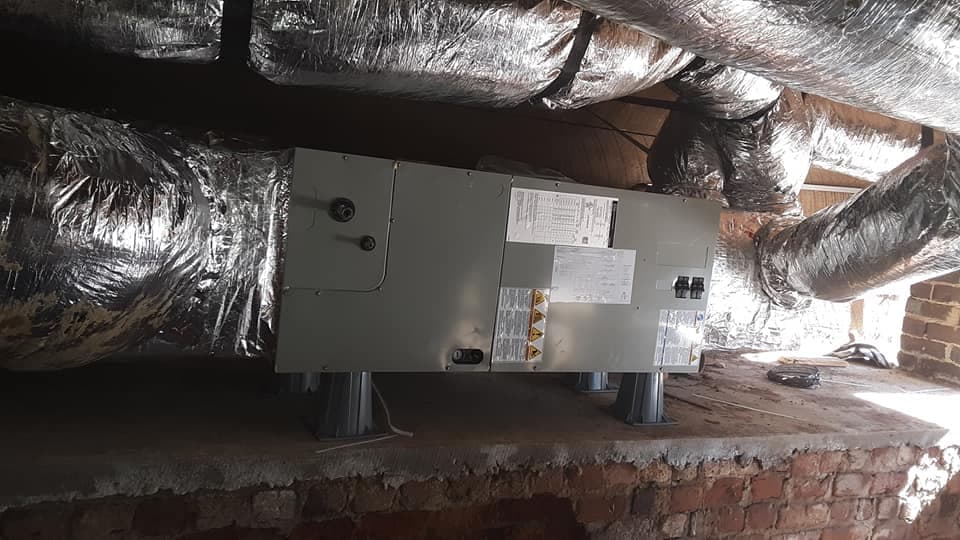
Now it's cold. Cold liquid and vapor mixed together. It travels to the indoor unit — the evaporator coil inside the air handler — where air from the house passes over it. The refrigerant absorbs heat from that air. Your house gets cooler because heat is being pulled out of the air into the refrigerant. As it absorbs heat, the refrigerant fully evaporates back into a gas. That gas returns to the compressor to start the cycle again.
The refrigerant itself is just the vehicle. It carries heat from inside the house to outside. It does it by changing state — liquid to gas, gas to liquid — in response to pressure changes. It doesn't get used up. It just goes around.
So when it's low, it leaked. Maybe through a pinhole in the coil. Maybe at a fitting where vibration worked a connection loose over years. Maybe through a Schrader valve that's worn. The system that got topped off two years ago and is now low again has been leaking continuously since the first time someone added refrigerant without finding the source.
Adding refrigerant without fixing the leak is maintenance theater. It addresses the symptom. The refrigerant you just paid for will be gone in a year or two, and you'll have it added again. Meanwhile, the leak that's letting refrigerant out may also be letting moisture in — and moisture in a refrigerant circuit causes acid formation that damages the compressor. The leak is the problem.
If refrigerant is low, it left somewhere. Find where. Then fix it.

About the Author
Vadim Melnic
Owner & Lead Technician, Fair Air Heating & Cooling·
EPA Section 608 Certified
Vadim has been serving the Asheville area since 2018, specializing in residential HVAC installation, service, and indoor air quality solutions. He founded Fair Air with a simple commitment: honest pricing, quality workmanship, and treating every home like his own.
Keep Reading
Related Articles
Your New System Isn't Performing the Way It Should — Here's Why
Rooms that were uneven before the installation were still uneven six months later. The system was running, conditioning the house, doing the basic job — but the efficiency improvement the contractor had sold on the front end hadn't materialized. The bills were marginally better,...
Duct Leakage — The Efficiency Problem Hiding in Your Crawl Space
The system is 18 SEER. The house performs like it's 11.
The Tighter the House, the More Important Ventilation Becomes
The house was perfectly built. That was the problem.