

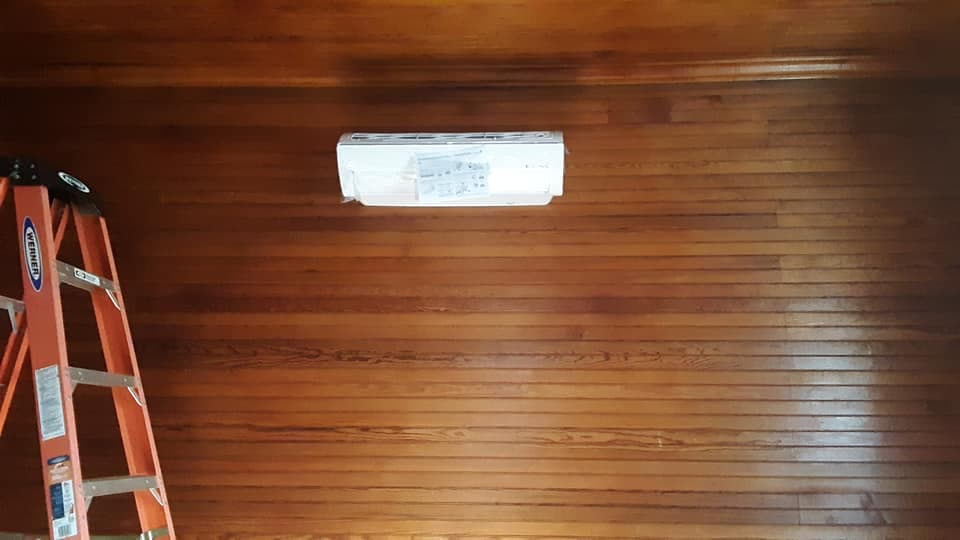
The Tighter the House, the More Important Ventilation Becomes
The house was perfectly built. That was the problem.
After an ERV was installed and the ventilation designed correctly, a monitor in the living room showed CO2 levels at 650 parts per million — well within the healthy range. Before the ERV, the same room was routinely hitting 1,400 ppm in the evenings when the family was home. The homeowners had attributed the headaches and fatigue to stress, to screen time, to anything other than the air they were breathing.
The house is a new construction in a development outside Weaverville — built to current energy codes, certified to Energy Star standards, with a tested air infiltration rate that the builder was proud of. Spray foam insulation in the attic and rim joists. Careful air sealing around penetrations. A tight thermal envelope. Everything you want in an efficient home in WNC's climate, where heating and cooling costs are real and the winters are serious.
The family moved in in autumn. By January they noticed the air feeling heavy on cold days when the house was closed up. A slight smell that was hard to identify — not mold, not gas, just density. By March they had an IAQ test done.
Elevated CO2. Elevated VOCs consistent with off-gassing from new construction materials. Relative humidity on the high side despite the cold weather outside. The house was holding everything the family put into it — breath, cooking fumes, cleaning products, moisture — with nowhere for any of it to go.
Older houses breathe. Not by design, but through leakage — gaps around windows, at sill plates, through electrical penetrations, under doors. That infiltration is wasteful from an energy standpoint, but it does one thing useful: it exchanges interior air with exterior air, slowly and uncontrolled, but constantly. A house that passes a blower door test at under 3 ACH50 — the threshold for Energy Star certification — has eliminated most of that unintentional exchange. In doing so, it becomes dependent on intentional, designed ventilation to maintain air quality.
ASHRAE 62.2 is the ventilation standard for residential buildings. It specifies a minimum ventilation rate based on floor area and number of bedrooms — in a 2,000-square-foot home, roughly 50 to 60 cubic feet per minute of fresh air exchange. In a leaky old house, infiltration handles that and then some. In a tight new house, it doesn't happen at all without a mechanical system.
An ERV — energy recovery ventilator — brings in fresh outside air and exhausts stale inside air through a heat-exchange core. In winter, the core transfers heat from the outgoing warm air to the incoming cold air, so you're not simply pumping cold outside air into the house. Typically 70 to 80 percent of the heat is recovered. You get fresh air without paying full price in heating energy to condition it. An HRV does the same with heat but doesn't transfer moisture, making it better suited to very cold climates where interior humidity needs to stay low.
For a WNC home with moderate humidity concerns, an ERV is generally the right choice — it transfers both heat and a portion of moisture, keeping the house from becoming too dry in winter while still bringing in fresh air.
Every breath in that house comes from a designed ventilation path. Now it does, anyway.

About the Author
Vadim Melnic
Owner & Lead Technician, Fair Air Heating & Cooling·
EPA Section 608 Certified
Vadim has been serving the Asheville area since 2018, specializing in residential HVAC installation, service, and indoor air quality solutions. He founded Fair Air with a simple commitment: honest pricing, quality workmanship, and treating every home like his own.
Keep Reading
Related Articles
Your New System Isn't Performing the Way It Should — Here's Why
Rooms that were uneven before the installation were still uneven six months later. The system was running, conditioning the house, doing the basic job — but the efficiency improvement the contractor had sold on the front end hadn't materialized. The bills were marginally better,...
Duct Leakage — The Efficiency Problem Hiding in Your Crawl Space
The system is 18 SEER. The house performs like it's 11.
How Refrigerant Actually Works — Explained for People Who Don't Care About Refrigerant
She wanted to understand it. Most people don't ask.