

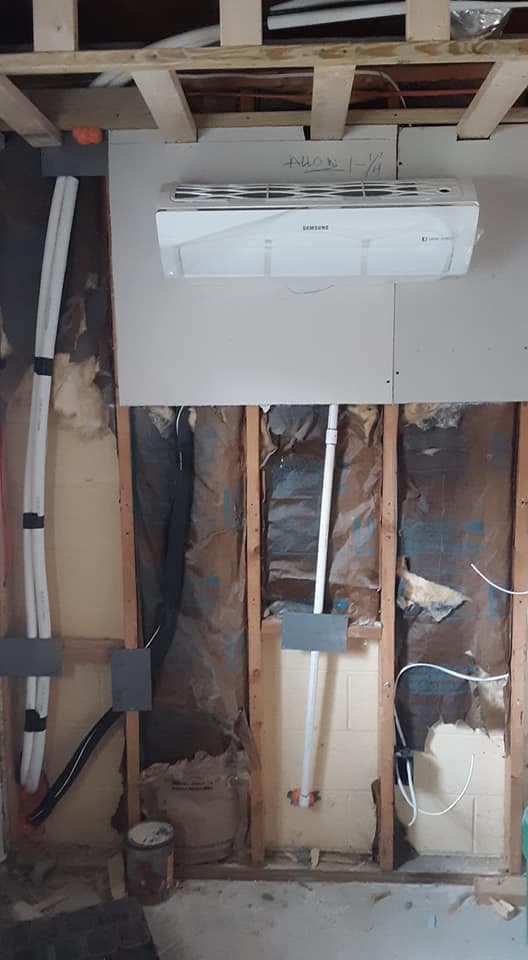
The Balance Point — Why Your Heat Pump Needs Backup Heat in WNC
The heat pump wasn't failing at 18°F. It was just doing what heat pumps do at 18°F.
And what heat pumps do at 18°F — even good ones, modern variable-speed units — is work increasingly hard for decreasing output. A heat pump extracts heat from outdoor air and moves it inside. At 47°F, it does this very efficiently, often producing three to four units of heat energy for every unit of electrical energy consumed. At 30°F, efficiency drops noticeably. At 18°F, a standard heat pump might be producing barely more heat than it's consuming in electricity. At 10°F, single-digit efficiency. The physics don't change because you want them to.
The homeowner had a new heat pump installed the previous spring — his first, having come from a gas furnace system. He was prepared for winter and confident in the equipment. January arrived the way January arrives in WNC: a week of overnight temperatures below 20°F, multiple mornings at or below 10°F, the ridge behind his house in Weaverville holding snow for twelve days.
The electric bill for that month was eye-opening.
The system came with backup electric strip heat — resistance heating coils in the air handler that produce heat electrically, the way a toaster does. Reliable, unlimited by outdoor temperature, but expensive to run. The strip heat is supposed to supplement the heat pump when temperatures drop far enough that the pump can't carry the full load alone. It's supposed to engage at the balance point — the outdoor temperature where the heat pump's output equals the home's heat loss — and only below that.
His system's balance point hadn't been set. The installer left the auxiliary heat lockout at the factory default, which was aggressive — the strips were engaging at 35°F, well above any temperature where the heat pump still had useful capacity. The heat pump was running and the strip heat was running simultaneously in weather where the heat pump alone would have managed comfortably. Two energy sources doing the same job.
The balance point for a specific home depends on the home's heat loss rate (determined by insulation, window area, air sealing) and the heat pump's output curve at various temperatures. It's a calculation, not a guess. For most WNC homes at moderate elevations, the balance point where it makes sense to engage supplemental heat is somewhere in the 25 to 35°F range — not 40°F, not 50°F. Setting the auxiliary lockout too high means the strips run in weather the heat pump can handle. Setting it too low means the house gets cold before the strips engage.
In WNC, the backup heat matters. Temperatures in the teens are not rare events here — they're a normal part of January and February, particularly above 2,000 feet. A heat pump without functional, correctly configured backup heat for WNC winters isn't a complete system. The backup needs to be sized for the heat loss at the design temperature, not just bolted on as an afterthought.
For this homeowner, the fix was the lockout setting. Fifteen minutes. The installer had just left it at default.
Set the lockout temperature correctly. That's the adjustment.

About the Author
Vadim Melnic
Owner & Lead Technician, Fair Air Heating & Cooling·
EPA Section 608 Certified
Vadim has been serving the Asheville area since 2018, specializing in residential HVAC installation, service, and indoor air quality solutions. He founded Fair Air with a simple commitment: honest pricing, quality workmanship, and treating every home like his own.
Keep Reading
Related Articles
Your Heat Just Went Out on a WNC Winter Night — Here's What to Do
He fixed it himself. It was 10:30 PM, 17°F outside, and his heat had stopped. He fixed it in four minutes and didn't call anyone.
Preparing Your WNC Mountain Cabin for Winter — Before You Leave It Empty
The pipes didn't freeze. The system came back in spring exactly as it had been left. The cabin was ready for the first guests of the season in early April without an emergency call, a remediation company, or a plumber trying to explain where to find the water shutoff in a house...
The Shoulder Season Problem — When WNC Can't Decide What Month It Is
They don't argue about the thermostat in July. In July the answer is obvious. They argue about it in October, when it's 68° by noon and 41° by midnight and whatever they set at 7 AM is wrong by 4 PM.