

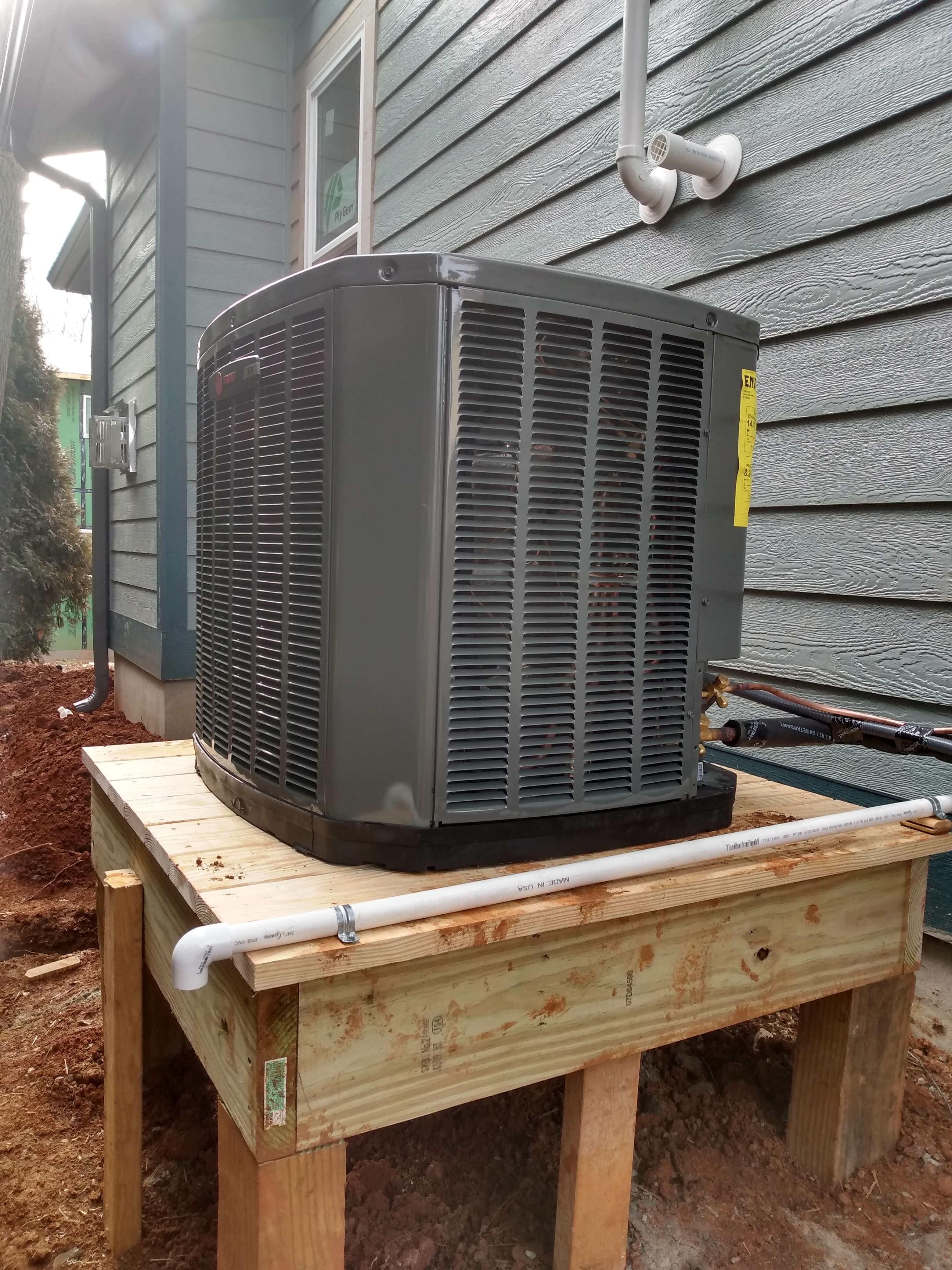
What Kills Copper Coils in WNC — And Why It's More Common Here Than You Think
The leak is smaller than a pinhole. You could look straight at it and not see it. The refrigerant doesn't spray out — it seeps, molecule by molecule, over months.
By the time the system is noticeably low on charge, the coil has been failing for a long time.
We find formicary corrosion on evaporator coils in WNC homes more often than we find it anywhere else we've worked. The combination of factors that causes it — humidity, organic acid vapors, oxygen, copper — is present here in a way that accelerates a process that would happen slowly elsewhere and barely at all in dry climates. A coil that might last twenty years in Arizona might fail in eight years in a Western North Carolina home with certain interior conditions.
The chemistry isn't complicated once you understand it. Formicary corrosion — named for its resemblance to ant tunnels under a microscope — occurs when formic or acetic acid vapors contact copper tubing in the presence of oxygen and moisture. The acid attacks the metal, boring small channels just beneath the surface. The channels grow until they breach the tubing wall. Refrigerant escapes. The system loses charge. The homeowner notices the house not cooling as well as it used to.
The source of the acid vapors is your indoor environment. Cleaning products, off-gassing from particleboard furniture and cabinetry, certain paints and adhesives, carpeting, and even some fabrics contribute volatile organic compounds that include formic and acetic acid. The air handler pulls indoor air across the evaporator coil continuously. Whatever is in your indoor air gets drawn across that copper surface, thousands of times a year, for years.
In WNC, the humidity amplifies this. Moisture on the coil surface — condensation is normal and constant during cooling operation — creates the liquid medium that makes the acid-oxygen-copper reaction work. High humidity means more moisture. More moisture means more reaction. Mountain homes that stay damp in shoulder seasons, homes with crawlspace moisture intrusion, homes where the air handler is in a humid basement — these are the environments where formicary corrosion progresses fastest.
We've pulled coils from WNC homes that had failed in six years. We've seen the pattern in homes that have been meticulously maintained — because maintenance doesn't prevent this. There's no filter you can change, no refrigerant you can add, no maintenance schedule that stops formicary corrosion once the conditions are present.
What changes the outcome is detection and decision-making. When we're servicing a system and find a coil that's losing charge without an obvious cause, or when a system has been repeatedly recharged without a documented repair, we look for corrosion. The visual signs — blue-green or black discoloration on the copper surface — are not always present at the failure point, but they often appear nearby. UV dye, electronic leak detection, and sometimes nitrogen pressure testing help locate pinhole failures that a visual inspection would miss.
The repair options depend on the scope. A single pinhole in an accessible location can sometimes be brazed. But formicary corrosion is rarely a single event — the conditions that created one failure exist throughout the coil. Repairing one pinhole and recharging the system often means another pinhole emerges in the same season. For coils showing widespread corrosion signs, or coils that have failed once and been repaired once already, coil replacement or system replacement is usually the more honest recommendation.
For homes with documented indoor air quality issues — strong cleaning product use, new construction off-gassing, moisture intrusion from the crawlspace — an aluminum-coil evaporator is worth asking about. Aluminum is not immune to all corrosion, but it is immune to formicary corrosion, which requires copper. The tradeoff involves cost and efficiency characteristics, but for a home where copper coil failure is a demonstrated pattern, it's a real option.
The coil failed. The system lost charge. That's the visible part of the story. The invisible part started years earlier, in the air moving across the copper.

About the Author
Vadim Melnic
Owner & Lead Technician, Fair Air Heating & Cooling·
EPA Section 608 Certified
Vadim has been serving the Asheville area since 2018, specializing in residential HVAC installation, service, and indoor air quality solutions. He founded Fair Air with a simple commitment: honest pricing, quality workmanship, and treating every home like his own.
Keep Reading
Related Articles
Summer Humidity in WNC — Why 72° Can Still Feel Wrong
The thermostat said 72°. The house felt nothing like 72°.
Your New System Isn't Performing the Way It Should — Here's Why
Rooms that were uneven before the installation were still uneven six months later. The system was running, conditioning the house, doing the basic job — but the efficiency improvement the contractor had sold on the front end hadn't materialized. The bills were marginally better,...
Duct Leakage — The Efficiency Problem Hiding in Your Crawl Space
The system is 18 SEER. The house performs like it's 11.