

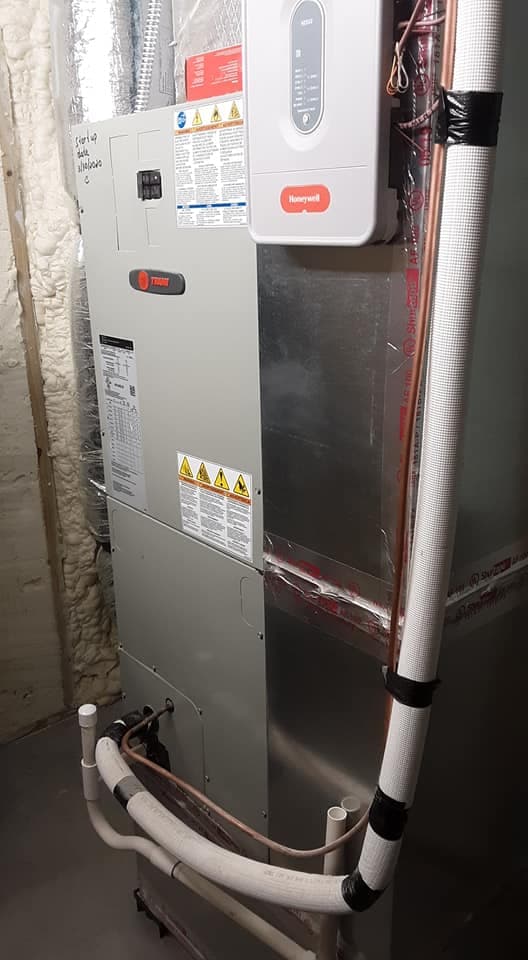
Summer Humidity in WNC — Why 72° Can Still Feel Wrong
The thermostat said 72°. The house felt nothing like 72°.
She'd had the AC checked in spring. The system was running fine — refrigerant charge correct, airflow good, everything operating within spec. And still, by mid-afternoon on any muggy July day, the house had that thick, damp quality that made sitting still feel like work. She turned the thermostat down to 70° in desperation. That helped slightly. But 70° in a house with 68% relative humidity still doesn't feel like 70°.
This is not an unusual complaint in WNC. It's almost a seasonal ritual — the call that starts with "the system is working but the house doesn't feel right." And the system usually is working. Temperature is only half of comfort.
WNC summers carry a specific humidity profile that catches people off guard, particularly those who moved here from drier climates. The afternoon thunderstorm pattern — common from June through August across the mountains — loads the air with moisture that doesn't clear quickly. Valley homes sit in the drainage zones where cooler, denser, moister air pools at night. Homes at elevation get the orographic moisture that comes with the cloud cover that wraps the upper ridges. The mountains make their own weather, and that weather is frequently wet.
The problem is what HVAC equipment is designed to remove. Every air conditioner removes two types of heat: sensible heat, which is the temperature you can measure with a thermometer, and latent heat, which is the moisture suspended in the air. A properly sized system running long cooling cycles removes both. The system will pull down the temperature and, over the course of a longer run, drop the relative humidity as moisture condenses on the evaporator coil and drains away.
But an oversized system — one too large for the house — cools the space quickly and shuts off before it's had time to work on the latent load. The house hits 72° in twenty minutes, the system cycles off, and the humidity stays exactly where it was. The next cycle starts, hits 72° again, shuts off again. Short-cycling is efficient at cooling and nearly useless at dehumidifying.
This is one of the reasons proper sizing matters so much in WNC specifically. The load calculations have to account for the latent load your climate generates, not just the sensible cooling load. A system sized purely for temperature control in a high-humidity mountain environment is a system that will leave you feeling damp all summer.
The fix depends on the situation. On an older or oversized system, a standalone dehumidifier — a whole-house unit plumbed to a drain, not a portable tank-dumping unit — can supplement the AC's dehumidification and bring relative humidity down to the 45–55% range where 72° actually feels like 72°. On a new installation, right-sizing the equipment and selecting a variable-speed system that can run longer, slower cycles gives you both temperature and humidity control without the add-on.
Target 50% relative humidity indoors. Temperature is the number you set; humidity is the number you feel. Get both right, and summer in WNC becomes something you can actually enjoy.

About the Author
Vadim Melnic
Owner & Lead Technician, Fair Air Heating & Cooling·
EPA Section 608 Certified
Vadim has been serving the Asheville area since 2018, specializing in residential HVAC installation, service, and indoor air quality solutions. He founded Fair Air with a simple commitment: honest pricing, quality workmanship, and treating every home like his own.
Keep Reading
Related Articles
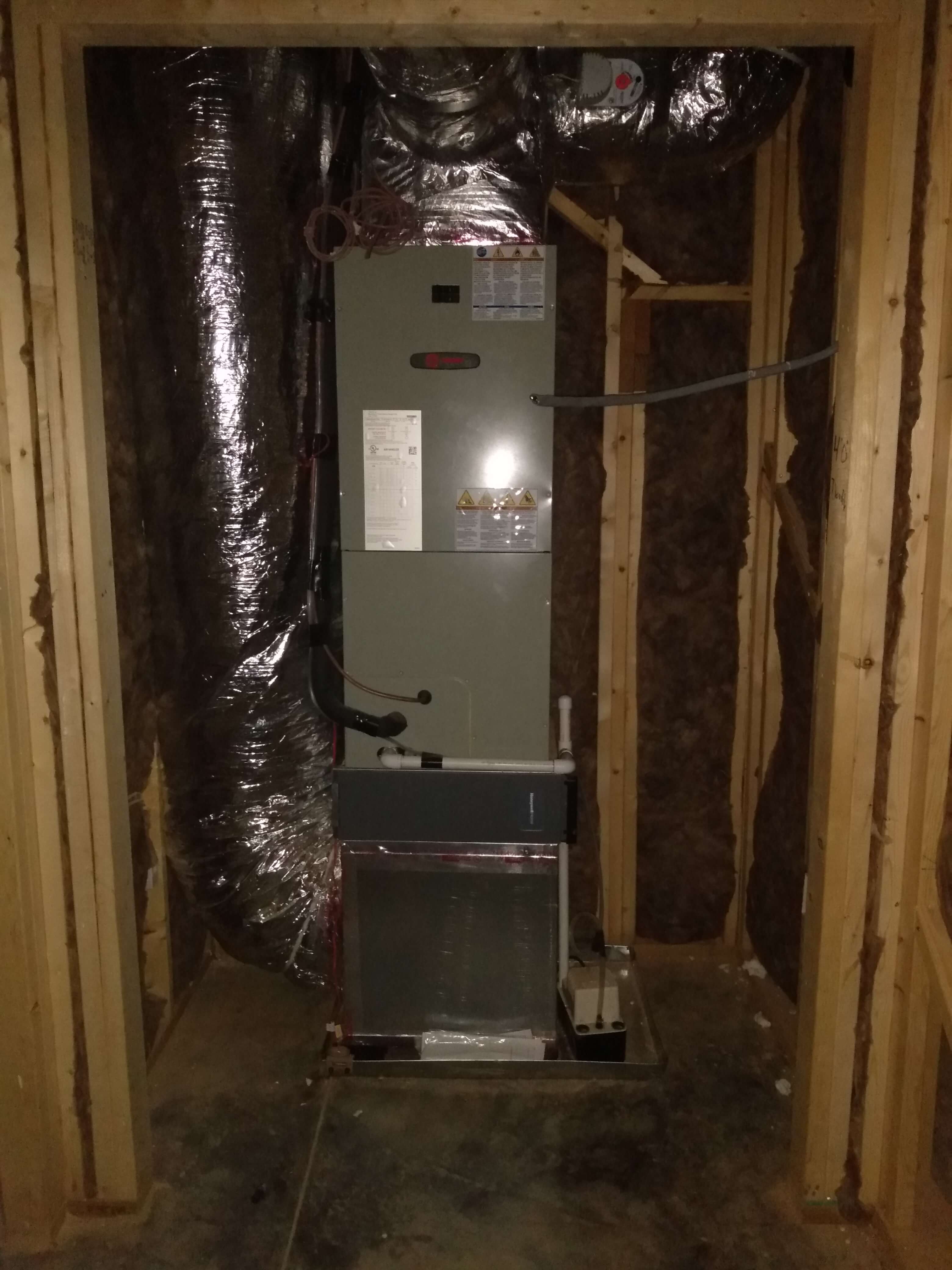
What a Proper HVAC Installation Actually Looks Like — Step by Step
Most people aren't in the room when their HVAC gets installed. They sign the contract, go to work, and come home to a system that either performs correctly or doesn't — and if it doesn't, they usually don't know what was skipped.
End-of-Season HVAC Shutdown — The Step Most People Skip
She turned the thermostat from cool to heat in October. That was the shutdown. The system ran all the following summer and never got a second look between the last cool day of October and the first maintenance call the following spring.
Your Heat Just Went Out on a WNC Winter Night — Here's What to Do
He fixed it himself. It was 10:30 PM, 17°F outside, and his heat had stopped. He fixed it in four minutes and didn't call anyone.