

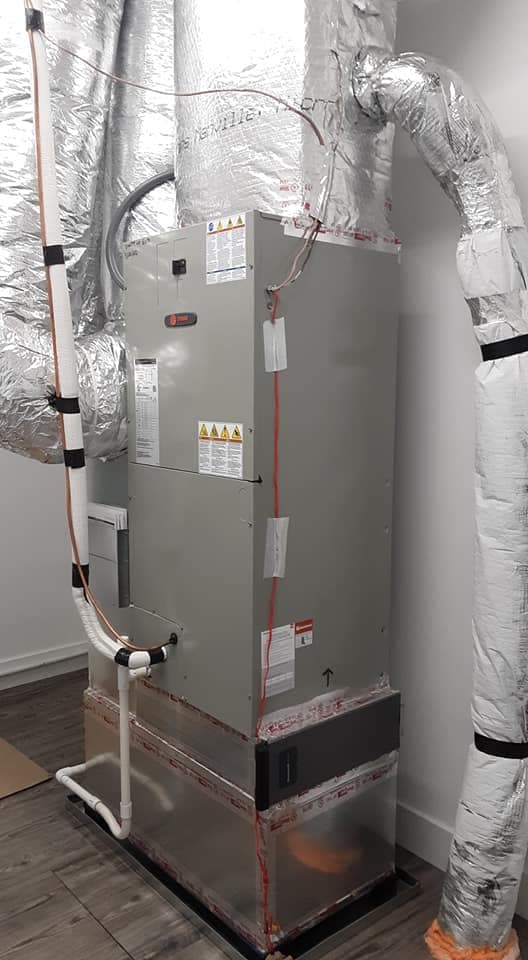
When the Temperature Drops Fast in WNC — What to Do and What Not To
The house was at 58° by morning. She'd gone to bed with the heat set to 68°, woken up at 6 AM to something that felt wrong, and checked the thermostat. The outdoor temperature was 9°F. The heat pump had been running all night.
She called us at 7:15. While she waited, she opened the propane fireplace in the living room, gathered the dog and the extra blankets, and started making coffee. The house held. We got there by noon.
The system wasn't broken. The heat pump was doing exactly what a heat pump does at 9°F — running hard, extracting what little heat is available in very cold air, and falling short of what the house needed. The auxiliary electric strips, which should have been carrying the load the heat pump couldn't, weren't firing. A failed sequencer — a small relay component that staggers the strip heaters so they don't all come on at once and trip the breaker. Ten-dollar part. An hour of labor. The system ran correctly for the rest of a very cold week.
WNC cold snaps are fast and steep. A front moves through overnight and the temperature drops 30 degrees before sunrise. The mountain terrain accelerates this — ridge homes catch wind, valley homes trap cold air, and elevation homes wake up at 8°F while the Asheville Weather Service station reads 22°F. The flat-country concept of "cold weather" doesn't map cleanly here.
When a cold snap hits and the heat isn't keeping up, start with the simple checks before calling. Look at the thermostat — make sure it's set to heat mode and the temperature is above what the house is reading. Check the breaker panel: heat pumps typically have two breakers, one for the outdoor unit and one for the air handler, and either one tripping will cause the system to underperform or stop. Look at the filter — a clogged filter in a forced-air system restricts airflow across the heat strips and reduces their output dramatically. Make sure the outdoor unit isn't buried in snow or ice to the point that air can't circulate through the coil.
What not to do: don't try to thaw the outdoor unit with hot water. Some ice on the outdoor unit during cold weather is normal — the heat pump runs a defrost cycle periodically to clear it. An outdoor unit with a thin layer of frost or ice is a heat pump doing its job. An outdoor unit encased in a solid block of ice, with ice covering the top and sides, is a problem — but the fix is calling us, not pouring boiling water over refrigerant lines and a compressor that's already under thermal stress.
Don't crank the thermostat up to 80° hoping to make the system work faster. Heat pumps and furnaces output a fixed amount of heat per hour regardless of the setpoint. Setting 80° won't increase heat production — it will just keep the system running continuously past the point where the house has actually reached a comfortable temperature.
If the house is dropping temperature and the system is running, check those basics, open whatever supplemental heat source you have — fireplace, space heater in the room you're in — and call. A system that's running but not keeping up in a true cold snap is often something fixable. The houses that make it through WNC winters without incident are usually the ones where the system was looked at in October, the aux heat was verified before it was needed, and someone made the call before the temperature hit single digits.

About the Author
Vadim Melnic
Owner & Lead Technician, Fair Air Heating & Cooling·
EPA Section 608 Certified
Vadim has been serving the Asheville area since 2018, specializing in residential HVAC installation, service, and indoor air quality solutions. He founded Fair Air with a simple commitment: honest pricing, quality workmanship, and treating every home like his own.
Keep Reading
Related Articles
End-of-Season HVAC Shutdown — The Step Most People Skip
She turned the thermostat from cool to heat in October. That was the shutdown. The system ran all the following summer and never got a second look between the last cool day of October and the first maintenance call the following spring.
Your Heat Just Went Out on a WNC Winter Night — Here's What to Do
He fixed it himself. It was 10:30 PM, 17°F outside, and his heat had stopped. He fixed it in four minutes and didn't call anyone.
Preparing Your WNC Mountain Cabin for Winter — Before You Leave It Empty
The pipes didn't freeze. The system came back in spring exactly as it had been left. The cabin was ready for the first guests of the season in early April without an emergency call, a remediation company, or a plumber trying to explain where to find the water shutoff in a house...