

Pollen Season in WNC — What It Does to Your Filter and Your System
The filter was only six weeks old. He pulled it out and held it up to the light coming through the kitchen window. No light came through.
He'd installed a clean filter in mid-March. By the first of May, what he was holding looked like a dense gray-yellow slab. It had weight to it. He photographed it next to his hand for scale and texted us the picture, which we've seen probably three dozen versions of over the years. The mountains are serious about spring.
This was a house in Black Mountain, where the April pollen comes in waves — first the maples and elms, then the oak, then the pine, then the grass. The yellow haze that settles on every car and deck and outdoor surface in WNC each spring is not decorating the air — it's going through every forced-air system in the region. A return air grille is essentially a suction cup pointed at whatever is floating past it, and in April and May in Western North Carolina, what's floating past it is extraordinary.
The filter had been doing its job. Completely. Which is precisely why the system was struggling.
A filter that packed solid in six weeks was restricting airflow enough that the blower was working against significant static pressure. The air handler was moving less air than it was designed to move. The evaporator coil, getting less airflow across it, was running colder than it should — approaching the temperature where condensate freezes on the coil rather than draining away. The system wasn't failing. It was being starved.
The fix was the new filter. But the lesson is the check interval.
Most homeowner guidance on filter changes is written for the rest of the country, not WNC in April. The standard advice — change your filter every 90 days — assumes a reasonably average airborne particulate load. WNC pollen season is not average. From mid-March through late May, particularly in the river valleys and lower elevations around Asheville, Swannanoa, and Weaverville, filter load can be three to four times what it is any other time of year. A filter that would last three months in September is done in six weeks by May.
Check the filter in April. Check it again in May. Hold it up to a light source — if you can't see light through the filter medium, it needs to change regardless of when you last changed it. A filter's job is to protect the evaporator coil and blower from debris accumulation; a packed filter does neither, because no air is moving through it.
MERV rating matters here too. A higher-MERV filter catches smaller particles more effectively, but it also restricts airflow more aggressively as it loads up. If you're using a MERV-11 or MERV-13 filter in pollen season, your check interval should be shorter, not longer — the filter is catching more, which means it's filling faster.
During peak pollen — roughly the six weeks between the first warm days and the end of May — check the filter every two to three weeks. Change it when it's packed. The filter costs a few dollars. The service call for a frozen coil costs considerably more.

About the Author
Vadim Melnic
Owner & Lead Technician, Fair Air Heating & Cooling·
EPA Section 608 Certified
Vadim has been serving the Asheville area since 2018, specializing in residential HVAC installation, service, and indoor air quality solutions. He founded Fair Air with a simple commitment: honest pricing, quality workmanship, and treating every home like his own.
Keep Reading
Related Articles
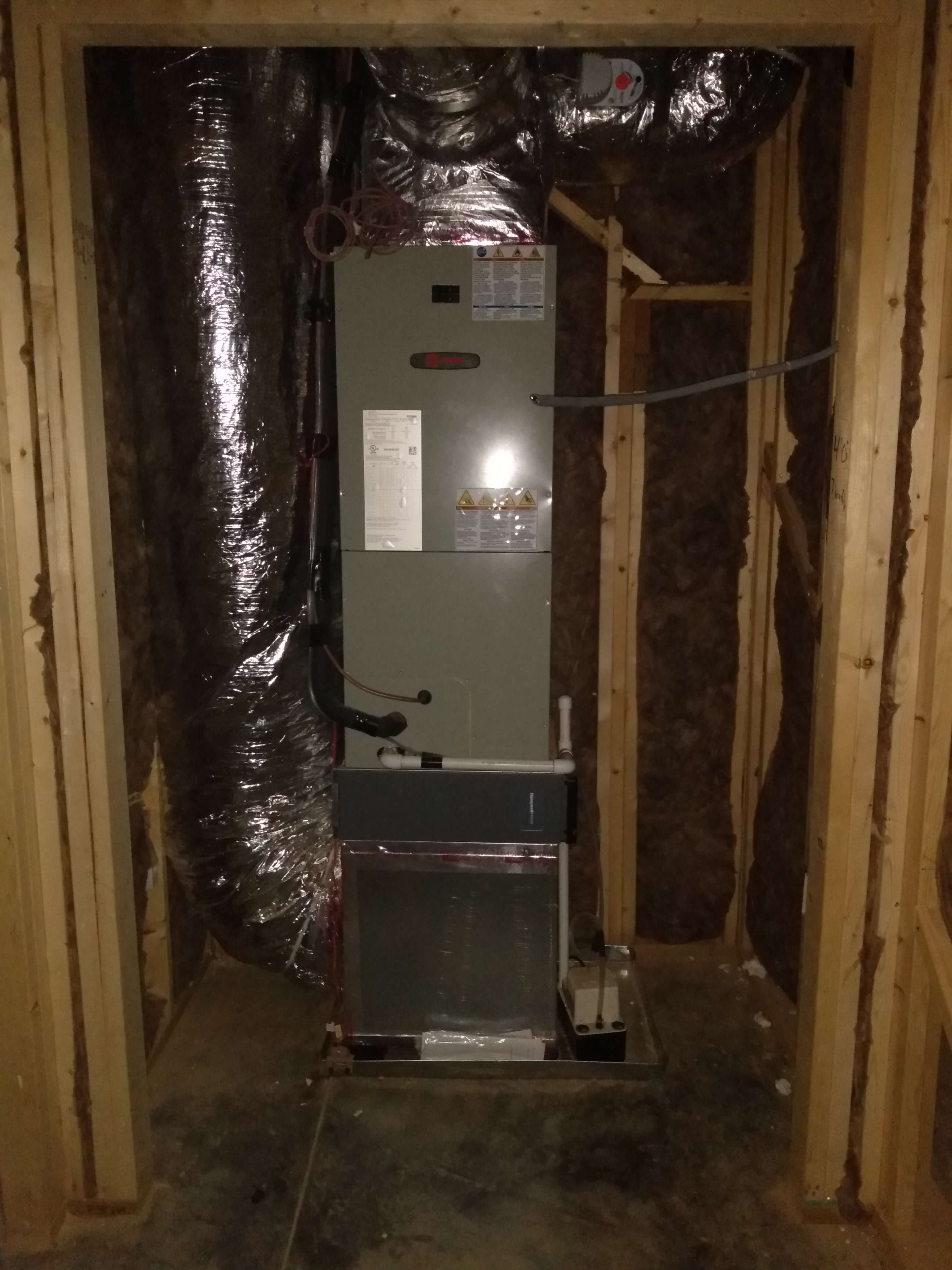
What a Proper HVAC Installation Actually Looks Like — Step by Step
Most people aren't in the room when their HVAC gets installed. They sign the contract, go to work, and come home to a system that either performs correctly or doesn't — and if it doesn't, they usually don't know what was skipped.
End-of-Season HVAC Shutdown — The Step Most People Skip
She turned the thermostat from cool to heat in October. That was the shutdown. The system ran all the following summer and never got a second look between the last cool day of October and the first maintenance call the following spring.
Your Heat Just Went Out on a WNC Winter Night — Here's What to Do
He fixed it himself. It was 10:30 PM, 17°F outside, and his heat had stopped. He fixed it in four minutes and didn't call anyone.