

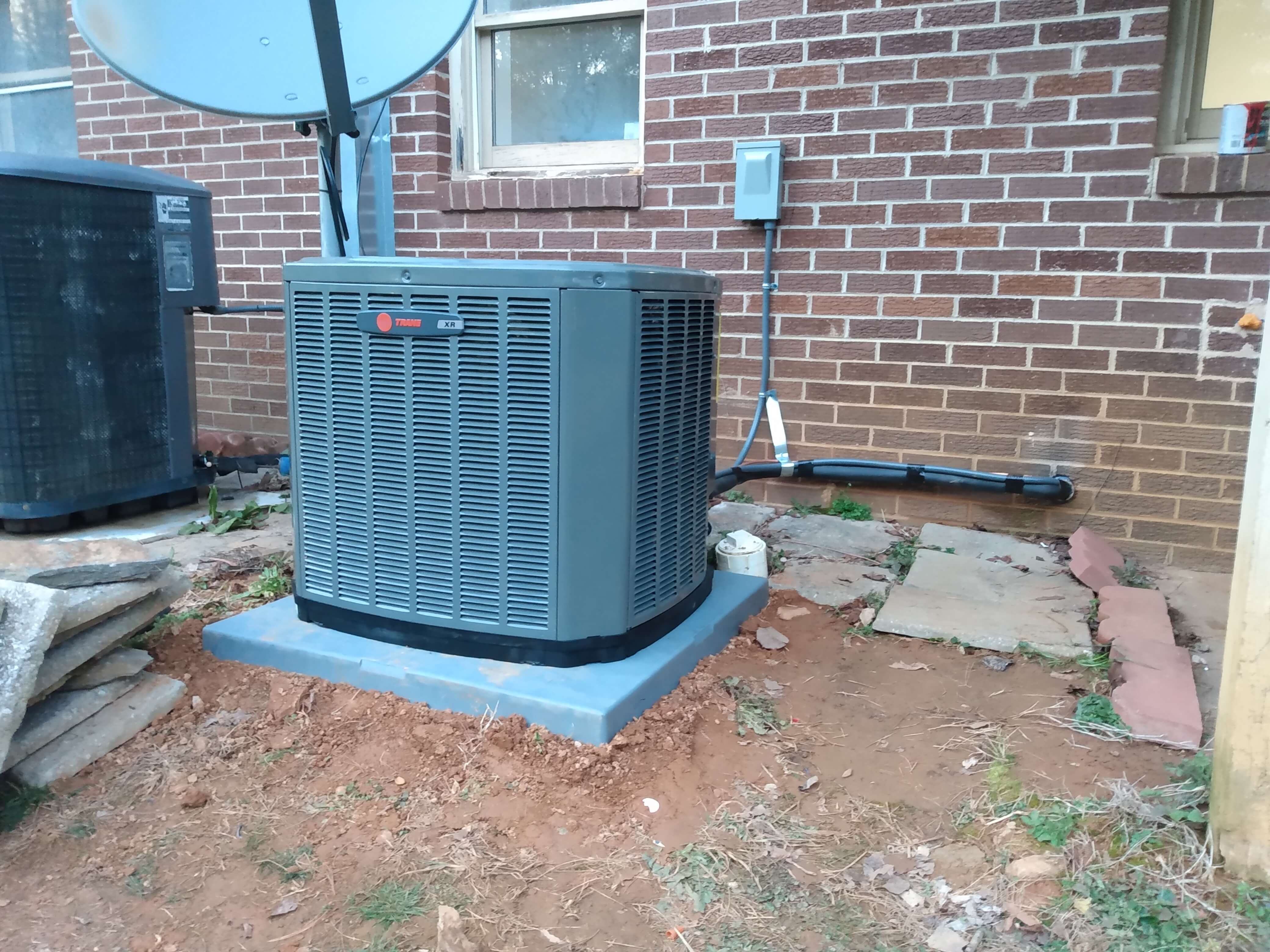
Humidity at Elevation — Why WNC Comfort Isn't Just About Temperature
72 degrees. And still clammy.
The house is comfortable now — temperature and humidity both in the right range, and the difference in how the air feels is immediate. Not a subtle improvement. The kind of difference you notice in the first breath.
The homeowner lives at about 3,000 feet above Asheville, in a house that's well-insulated and reasonably tight. Last summer she ran the AC regularly and kept the house at exactly the temperature she wanted. She wasn't hot. She was just never quite comfortable — a baseline dampness in the air, clothing that never felt fully dry, that particular sticky feeling on furniture upholstery that shouldn't exist at 72 degrees. She figured it was just mountain summer. She'd been here ten years and assumed this was how it went.
Her indoor relative humidity was running between 65 and 70 percent.
At sea level on the coast, people know humidity. The high dew points, the air that sits on you. What's less understood is that WNC mountain elevations have their own humidity patterns — driven by afternoon convective thunderstorms, dense forest canopy that respires moisture, valleys that trap humid air, and the way cloud cover at elevation keeps moisture from burning off. The summers here aren't the blazing dry heat of the high desert. They're green and lush and frequently wet. Indoor relative humidity above 60 percent is common in homes that aren't specifically managing it.
The problem with her system wasn't that it was broken. It was sized for the square footage and ran properly. The problem is that air conditioners remove humidity as a side effect of cooling — the evaporator coil is cold, moisture in the air condenses on it, it drains away. That process is called latent cooling: removing heat in the form of water vapor rather than lowering air temperature. But it only happens when the system runs long enough for the coil to get cold and stay cold.
Her system was slightly oversized. It would cool the air to setpoint quickly and shut off. Short runs, frequent cycles. The coil never got cold enough for long enough to pull serious moisture out. The temperature was right; the latent load was almost untouched.
There are two approaches. First, if the equipment is being replaced or was recently installed: proper load calculation using Manual J, which accounts for latent load specifically. An oversized system almost always underperforms on humidity because it doesn't run long enough to wring moisture out. A correctly sized system runs longer, slower cycles and does far better. Second, for an existing system that's working correctly on temperature but underperforming on humidity: a standalone dehumidifier, either a room unit or a whole-home unit tied into the duct system. A whole-home dehumidifier with a dedicated drain runs independently of the AC, removes moisture on its own schedule, and can be set to target a specific relative humidity — typically 50 to 55 percent for comfort and mold prevention.
She had a whole-home dehumidifier installed alongside her existing system. The AC doesn't change. The dehumidifier handles what the AC can't do in short cycles.
The right size equipment, allowed to run long cycles. That's the fix. And if you already have what you have, a dehumidifier fills the gap.

About the Author
Vadim Melnic
Owner & Lead Technician, Fair Air Heating & Cooling·
EPA Section 608 Certified
Vadim has been serving the Asheville area since 2018, specializing in residential HVAC installation, service, and indoor air quality solutions. He founded Fair Air with a simple commitment: honest pricing, quality workmanship, and treating every home like his own.
Keep Reading
Related Articles
Summer Humidity in WNC — Why 72° Can Still Feel Wrong
The thermostat said 72°. The house felt nothing like 72°.
Your New System Isn't Performing the Way It Should — Here's Why
Rooms that were uneven before the installation were still uneven six months later. The system was running, conditioning the house, doing the basic job — but the efficiency improvement the contractor had sold on the front end hadn't materialized. The bills were marginally better,...
Duct Leakage — The Efficiency Problem Hiding in Your Crawl Space
The system is 18 SEER. The house performs like it's 11.