

Before You Buy That Smart Thermostat, Check Your Heat Pump
The thermostat was working. The heat pump was working. They just weren't working together.
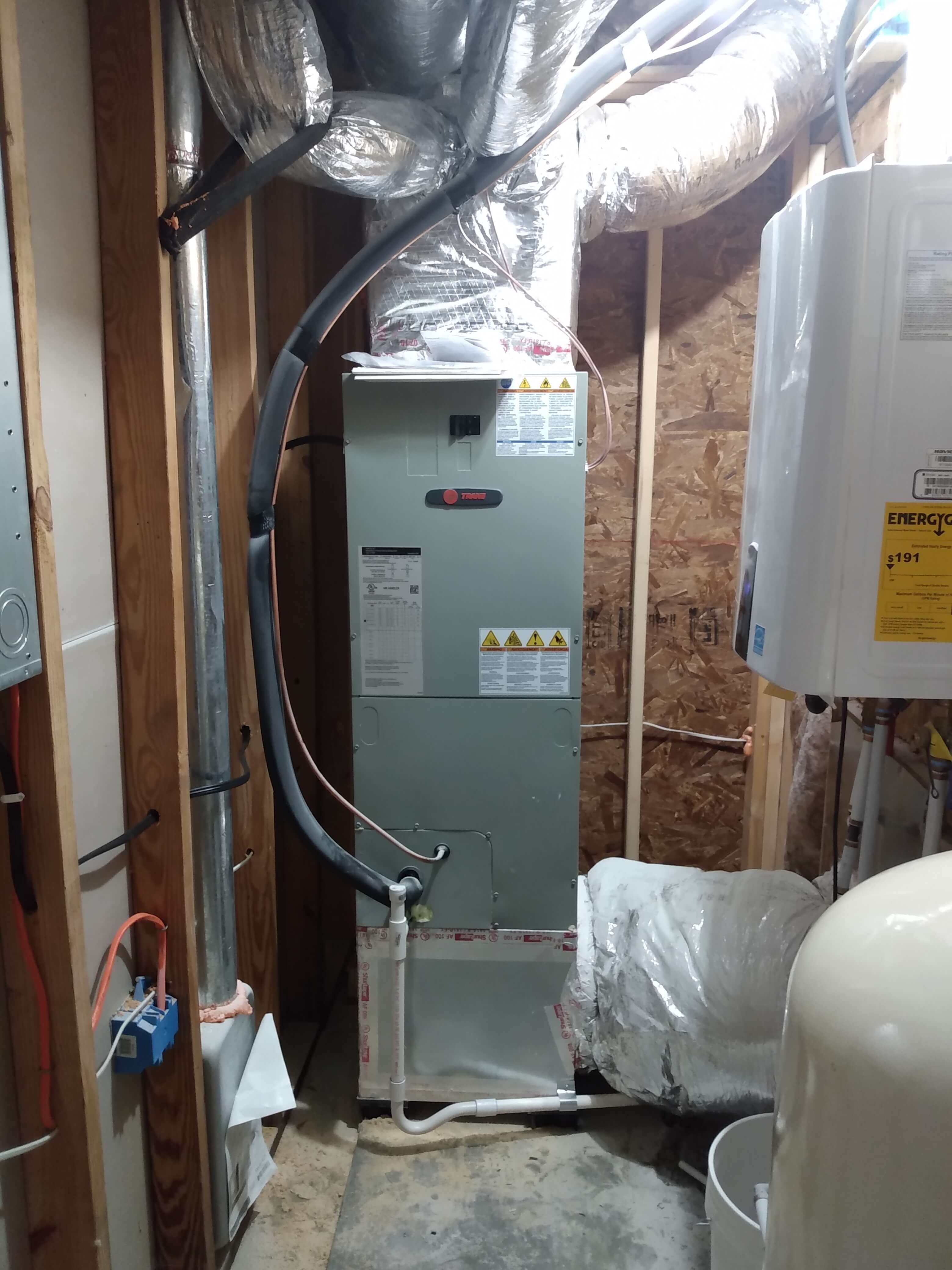
We found both pieces of equipment in good order when we arrived. The thermostat was reading the temperature accurately, responding to inputs, scheduling correctly. The heat pump was running — compressor engaged, refrigerant flowing, everything mechanically sound. But the electric bill for the first month after the thermostat swap had been roughly forty percent higher than the same month the year before, and the house never felt as warm as it should have.
The homeowner lives in Fletcher, in a house with a split heat pump system and a backup electric strip heat package — standard configuration for WNC homes where winter temperatures can make a heat pump work hard. He'd bought a popular smart thermostat, watched the installation video, and done everything correctly by the video's instructions. The thermostat showed no errors. The heat pump ran when he asked it to run.
What was happening inside the wiring was the problem.
Heat pump systems use a different control architecture than a furnace-and-central-AC setup. A furnace system has a heating signal wire (W), a cooling signal wire (Y), and a fan wire (G). Two stages of heat mean W1 and W2. Simple hierarchy. A heat pump system has a reversing valve — the component that switches the refrigerant flow direction between heating and cooling modes — plus an auxiliary electric heat stage that's supposed to supplement or replace the heat pump only when outdoor temperatures make the heat pump inefficient. The wiring for a heat pump uses O/B wires for the reversing valve and designates the auxiliary heat on a separate terminal with its own logic.
The smart thermostat he installed was a general-purpose model — excellent at controlling a furnace and AC combination, less well-suited for a heat pump with auxiliary heat. The thermostat didn't have a dedicated heat pump mode with proper O/B reversing valve control. It treated the auxiliary heat strip as a second stage of heating and activated it aggressively whenever the house was more than a degree or two below setpoint. The heat pump was running, but the backup heat strips were also running — constantly, in weather where the heat pump alone should have been sufficient.
The fix depends on the situation. Some smart thermostats have a heat pump mode buried in the settings — it just requires correct configuration and the right wiring assignment. Others need to be replaced entirely with a model specifically designed for heat pump systems. The manufacturer's compatibility checker, which most smart thermostat brands now publish online, lists whether a model supports heat pump with auxiliary heat and what wiring configuration it requires.
There's also the C-wire question. Most heat pumps have a common wire available at the air handler, but it's not always run to the thermostat location. Many smart thermostats require a C-wire for power — without it they try to draw power through the control wires, which can cause strange behavior in heat pump systems specifically. A C-wire adapter kit can sometimes solve this; sometimes it's worth running a new wire.
For the homeowner in Fletcher, we swapped the thermostat for a model with a proper heat pump mode, configured the O/B terminal correctly for his system's reversing valve polarity, and set the auxiliary heat lockout temperature so the strips wouldn't engage above 35°F outdoor temperature. System performance normalized. Next month's bill did too.
The right thermostat for the right system. Or the right wiring for the thermostat you already have.

About the Author
Vadim Melnic
Owner & Lead Technician, Fair Air Heating & Cooling·
EPA Section 608 Certified
Vadim has been serving the Asheville area since 2018, specializing in residential HVAC installation, service, and indoor air quality solutions. He founded Fair Air with a simple commitment: honest pricing, quality workmanship, and treating every home like his own.
Keep Reading
Related Articles
Your Heat Just Went Out on a WNC Winter Night — Here's What to Do
He fixed it himself. It was 10:30 PM, 17°F outside, and his heat had stopped. He fixed it in four minutes and didn't call anyone.
Preparing Your WNC Mountain Cabin for Winter — Before You Leave It Empty
The pipes didn't freeze. The system came back in spring exactly as it had been left. The cabin was ready for the first guests of the season in early April without an emergency call, a remediation company, or a plumber trying to explain where to find the water shutoff in a house...
The Shoulder Season Problem — When WNC Can't Decide What Month It Is
They don't argue about the thermostat in July. In July the answer is obvious. They argue about it in October, when it's 68° by noon and 41° by midnight and whatever they set at 7 AM is wrong by 4 PM.