

Crawl Space HVAC — What Most Contractors Get Wrong in WNC Homes
The duct run was there. The insulation was there. The air wasn't getting to the rooms.
Once we resealed the connections, repaired the vapor barrier, and addressed the insulation gaps, that part of the house started conditioning correctly for the first time in years. The homeowner had lived there for six years and assumed one bedroom just ran warm. It ran warm because roughly a third of the air destined for that room was dumping into the crawl before it made the turn.
This is a house in Arden — built in the late eighties on a crawl space foundation, which is how most WNC homes from that era were built and many still are. Crawl spaces were the answer in mountain terrain where slab-on-grade was difficult and full basements were expensive to excavate in rocky soil. They're practical. They're also where a lot of HVAC systems quietly underperform for years without anyone knowing.
The ductwork through that crawl had been installed by someone who understood the basics but didn't treat the crawl as the hostile environment it is. The connections between flex duct sections and hard metal collars were held with duct tape — the cloth kind, not mastic, which means they dried out and separated over years of temperature cycling. The insulation wrap on the flex duct was intact on the accessible sections but had compressed in places and separated in others, leaving some runs with R-2 effective insulation instead of the R-6 or R-8 the wrap was supposed to provide. And the vapor barrier on the ground — critical in a crawl space to prevent ground moisture from moving into the air — had been cut around plumbing and never properly repaired, leaving gaps where moisture entered freely.
None of this was catastrophic. The crawl wasn't flooded, the ducts weren't falling down, the system was running. But a WNC crawl space in summer is hot and humid, and in winter it's cold and damp. Conditioned air running through poorly insulated ducts in that environment loses energy before it reaches its destination. Moisture getting past a compromised vapor barrier raises the humidity in the crawl, which affects the wood framing and eventually the duct insulation itself.
The energy going into that crawl every winter — the air-conditioned air in summer, the heated air in winter — had been quietly escaping for years. It showed up in the utility bills as a baseline that always seemed slightly higher than it should be. It showed up in that one bedroom. It showed up in the musty smell that came and went seasonally.
A properly installed crawl space duct system uses mastic sealant or foil tape — not cloth duct tape — at every connection between flex duct and metal. Every joint. The flex duct insulation is intact, unfurled to its full diameter (compressed flex duct loses both insulation value and airflow capacity), and the R-value matches the requirement for the climate zone. In WNC's climate zone 4 and 5 depending on elevation, R-8 on crawl space duct runs is the minimum worth having. The vapor barrier covers the entire crawl floor, laps up the foundation walls, and is sealed or repaired around penetrations.
There's also the question of whether the crawl should be conditioned entirely — sealed foundation vents, insulation on the walls rather than the floor above, treated as interior space. That's a bigger conversation with real cost, and it's not always necessary. But if you're running ductwork through an unconditioned crawl, you owe it serious installation attention.
Treat the crawl seriously. The ducts running through it are your HVAC system.

About the Author
Vadim Melnic
Owner & Lead Technician, Fair Air Heating & Cooling·
EPA Section 608 Certified
Vadim has been serving the Asheville area since 2018, specializing in residential HVAC installation, service, and indoor air quality solutions. He founded Fair Air with a simple commitment: honest pricing, quality workmanship, and treating every home like his own.
Keep Reading
Related Articles
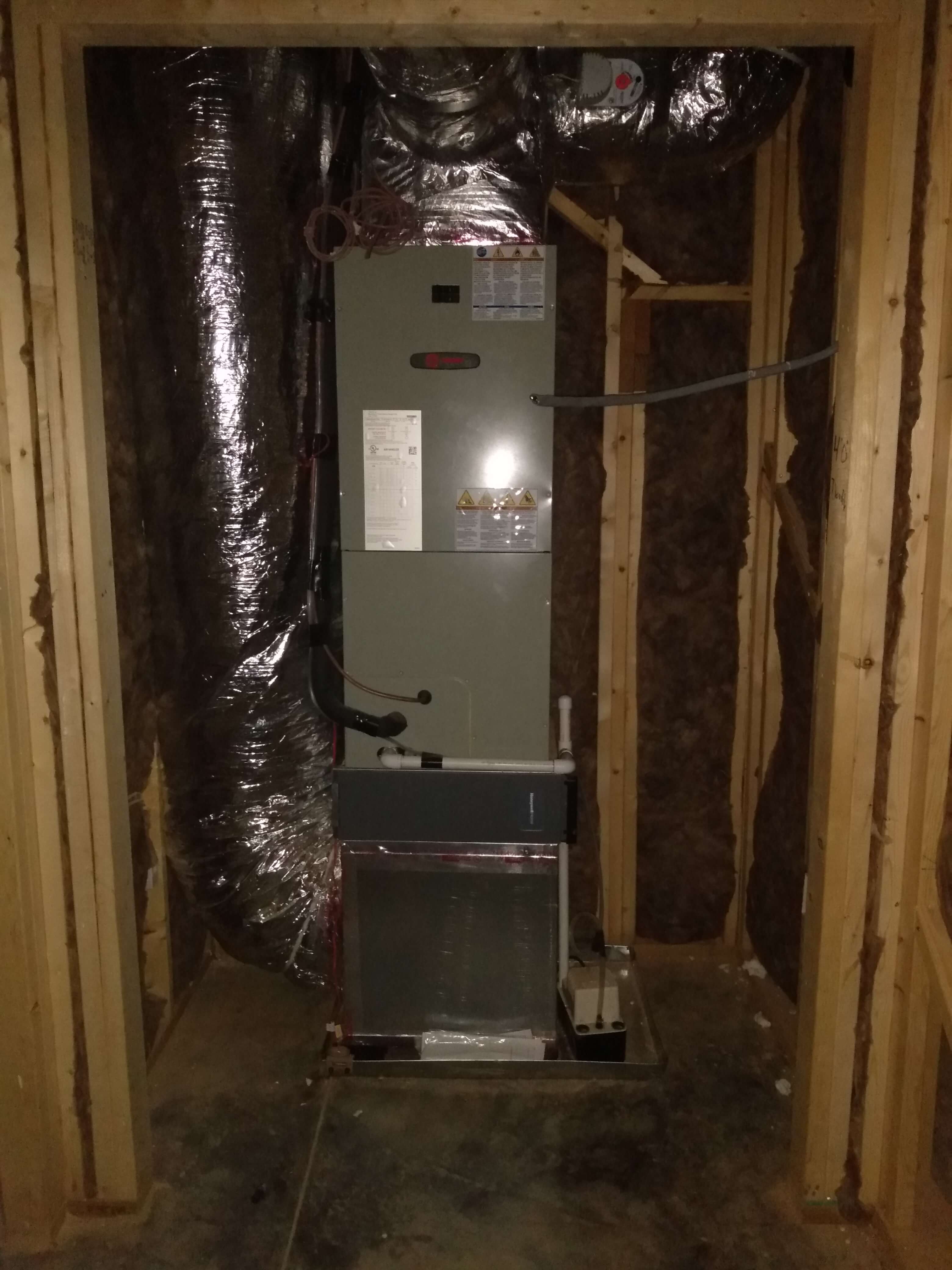
What a Proper HVAC Installation Actually Looks Like — Step by Step
Most people aren't in the room when their HVAC gets installed. They sign the contract, go to work, and come home to a system that either performs correctly or doesn't — and if it doesn't, they usually don't know what was skipped.
The Shoulder Season Problem — When WNC Can't Decide What Month It Is
They don't argue about the thermostat in July. In July the answer is obvious. They argue about it in October, when it's 68° by noon and 41° by midnight and whatever they set at 7 AM is wrong by 4 PM.
Pollen Season in WNC — What It Does to Your Filter and Your System
The filter was only six weeks old. He pulled it out and held it up to the light coming through the kitchen window. No light came through.