

The Duct Seal That Changed Everything
35% of the air she was paying to condition was going into the crawl.
Not into her house. Into the crawl space below it — into the dirt and the vapor barrier and the insulation, into the space between the floor joists where no one lives. Every time the system ran, more than a third of what it produced was doing nothing useful. Heating the crawl in winter. Cooling the crawl in summer. Consumed and wasted.
The system performed correctly after we sealed the ductwork. She didn't replace it.
The previous technician wasn't wrong that the equipment was aging — fifteen years on a residential HVAC system is a real number, and it's worth knowing. But aging equipment and poorly performing equipment are different things. The equipment in this house was still mechanically sound: compressor had good pressure, heat exchanger was intact, blower motor was pulling correct amps. What was failing was the delivery system. What was failing was the ductwork.
What she would have spent: somewhere between four and seven thousand dollars on a new system, depending on equipment and access. What she spent on duct sealing: a fraction of that.
We performed a duct leakage test before we touched anything — a blower door setup at the air handler to pressurize the duct system and measure how much air escapes. The number that came back was 35%. Industry standard for acceptable leakage on a system this age is somewhere around 15%. Hers was more than double.
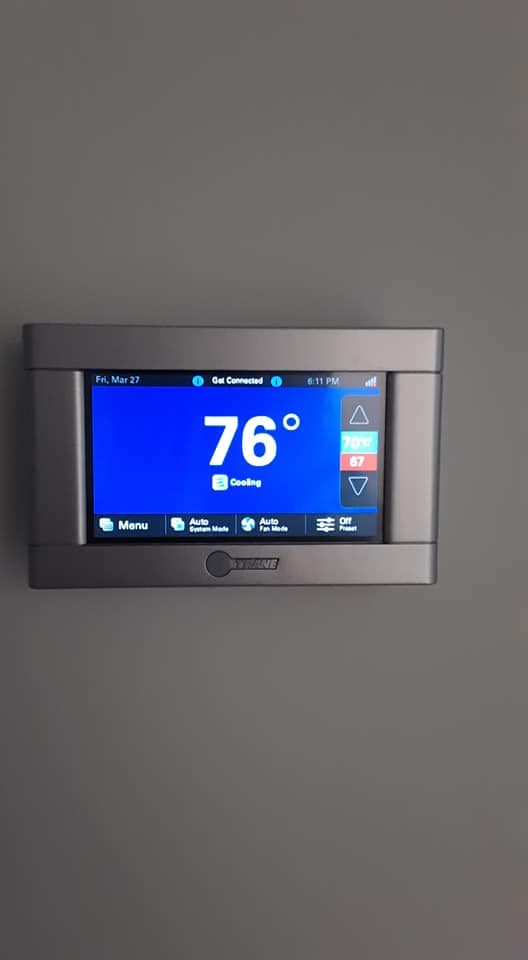
We went into the crawl with mastic and foil tape and spent most of a day on connections. Every boot — the fitting where the flex duct attaches to the floor register — was checked and sealed. Every trunk connection was mastic'd and wrapped. Three sections of flex duct had pulled away from their collars entirely and were sending conditioned air directly into the crawl space from about six inches away from the intended delivery point.
Before we left, we ran the pressurization test again. Leakage under 8%.
She called us the following week. Said the house was staying at temperature for the first time in years. Said she'd been running the system less because she wasn't fighting the heat loss anymore.
The system was fine. The ducts weren't. That's the distinction the previous tech missed, and it's the one that would have cost her a new system she didn't need.

About the Author
Vadim Melnic
Owner & Lead Technician, Fair Air Heating & Cooling·
EPA Section 608 Certified
Vadim has been serving the Asheville area since 2018, specializing in residential HVAC installation, service, and indoor air quality solutions. He founded Fair Air with a simple commitment: honest pricing, quality workmanship, and treating every home like his own.
Keep Reading
Related Articles
Duct Leakage — The Efficiency Problem Hiding in Your Crawl Space
The system is 18 SEER. The house performs like it's 11.
The Job That Reminded Us Why We Do This
We'd been at his house for parts of two days. The truck was loaded. The old equipment was in the trailer. We were wrapping up the paperwork, and he asked if we had a minute. Walked us around the side of the house to where he had a half-dozen raised beds tucked into a...
What a Good Day in the Trades Actually Looks Like
That's the whole scorecard. You go home at the end of the day and you think about whether anyone's going to call tomorrow with a problem from something you touched today. If the answer is no, the day worked.