
The Maintenance Contract That Paid for Itself Before March
The contract cost $180 that year. The repair it caught cost just over $400. The alternative was a new furnace — or worse.
He'd never done preventative maintenance before he called us in September. Had owned the house for six years, had the furnace serviced exactly once, hadn't thought much about it. A neighbor mentioned they used us. He called, asked about the maintenance agreement, signed up. Something he'd been meaning to get around to.
February. The furnace ran all winter.
The November visit was the one that mattered. Fall check before the heating season — electrical connections, flue inspection, burner operation, blower condition, and the heat exchanger inspection that requires pulling panels and knowing exactly where to look.
The heat exchanger had early-stage cracking on the primary cell. Not at the point of an active CO hazard — our combustion analyzer at the supply register showed background levels consistent with a clean burn, not breakthrough. But the crack was there, visible with a flashlight angled correctly, following the stress line at the corner of a cell where thermal cycling had been working on the metal for years.
A heat exchanger crack at early stage is a component repair. You replace the exchanger, the furnace runs correctly, the problem is resolved. A heat exchanger crack at late stage is a replacement conversation — the cell has failed to the point where contamination is measurable and the furnace is condemned. And a heat exchanger that cracks through completely during a heating season is a potential CO event, which is the outcome that nobody discusses in dollar terms because there aren't good dollar terms for it.
He paid the repair bill without much discussion. Asked what the crack meant in plain language. We told him: caught early, it's a part replacement and a couple hours of labor; caught late, it's a furnace; not caught, it's a problem that can hurt people.
He nodded and said he'd be calling us in the spring for the cooling check.
The crack — not visible without pulling the inspection panels, angling the light correctly, knowing exactly what heat exchangers look like when they're beginning to fail. You can't see it from the front of the furnace. You need to be in there, looking, with the right light and the right experience.
That's what the fall visit is for. One visit. That's all it took.

About the Author
Vadim Melnic
Owner & Lead Technician, Fair Air Heating & Cooling·
EPA Section 608 Certified
Vadim has been serving the Asheville area since 2018, specializing in residential HVAC installation, service, and indoor air quality solutions. He founded Fair Air with a simple commitment: honest pricing, quality workmanship, and treating every home like his own.
Keep Reading
Related Articles
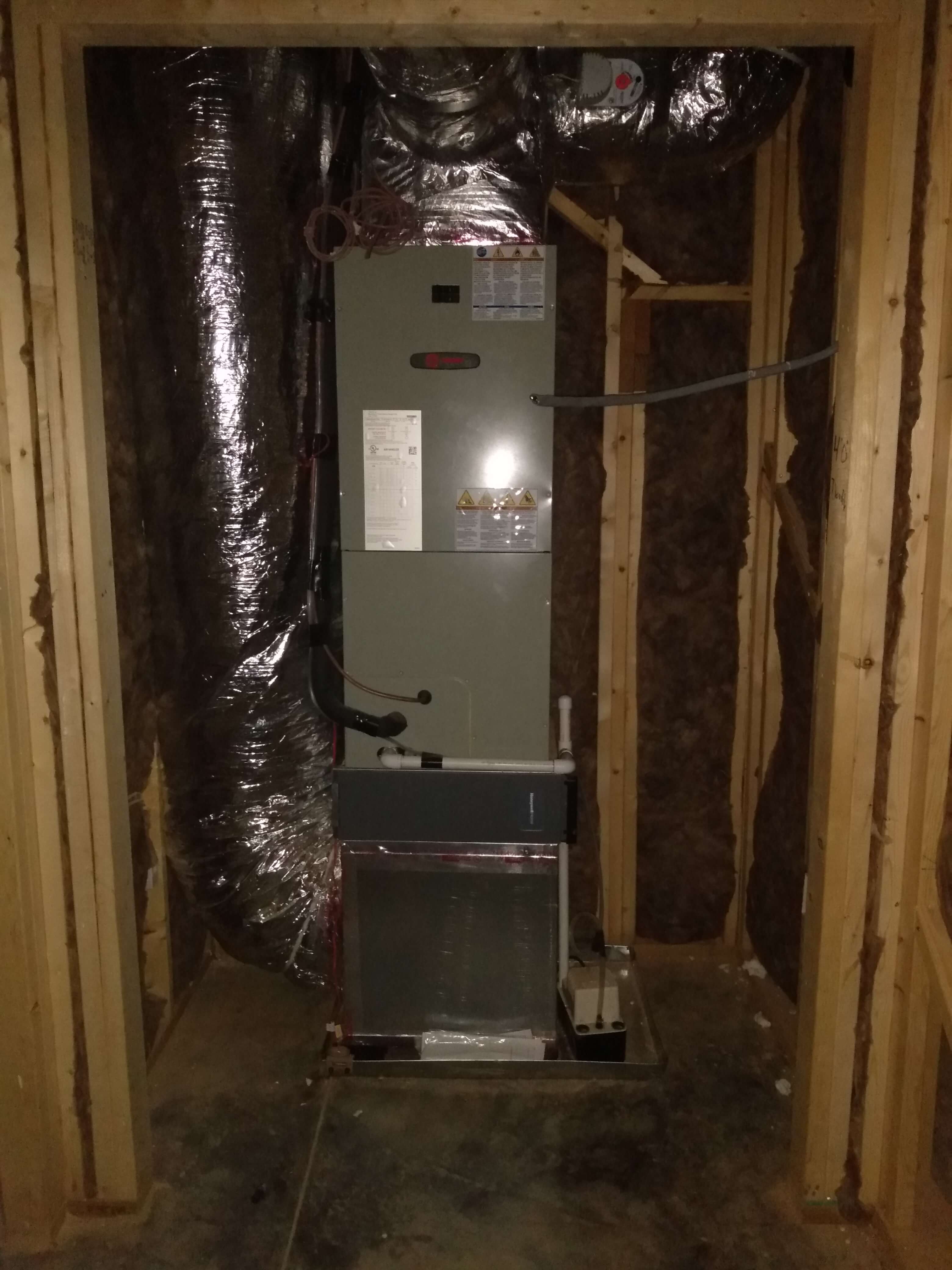
What a Proper HVAC Installation Actually Looks Like — Step by Step
Most people aren't in the room when their HVAC gets installed. They sign the contract, go to work, and come home to a system that either performs correctly or doesn't — and if it doesn't, they usually don't know what was skipped.
The Shoulder Season Problem — When WNC Can't Decide What Month It Is
They don't argue about the thermostat in July. In July the answer is obvious. They argue about it in October, when it's 68° by noon and 41° by midnight and whatever they set at 7 AM is wrong by 4 PM.
Pollen Season in WNC — What It Does to Your Filter and Your System
The filter was only six weeks old. He pulled it out and held it up to the light coming through the kitchen window. No light came through.