

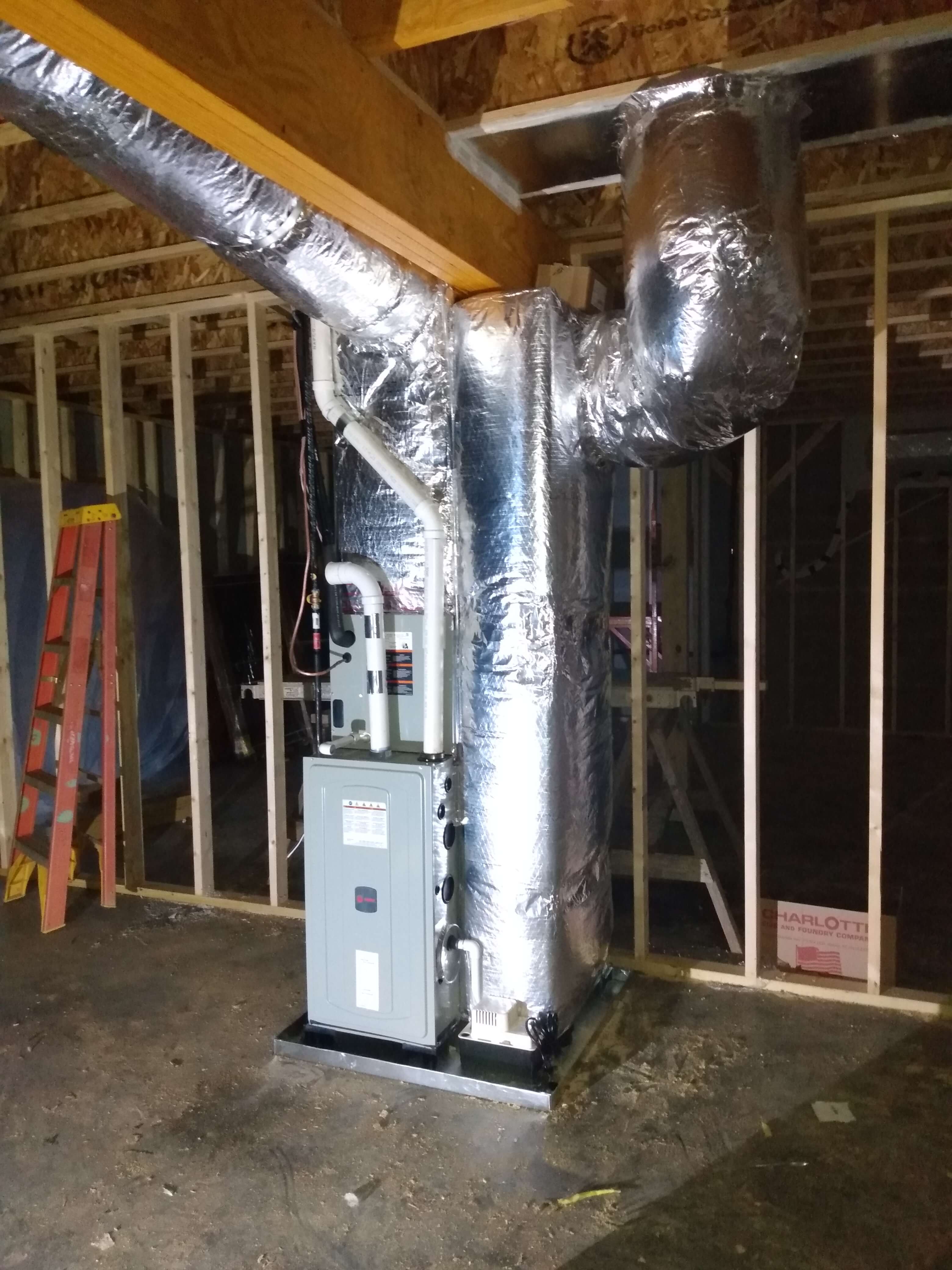
Mini-Splits vs. Central Air in WNC — Which One Is Actually Right for Your Home?
The addition stays comfortable year-round now. She doesn't think about it anymore — which is the goal. She just uses the room.
Before we installed the mini-split, that addition was an afterthought in every season. Too hot in August, too cold in January, and no obvious way to change it without a significant construction project. She'd asked a previous contractor about extending the central system. He'd told her it was possible but expensive and she'd probably notice a performance drop in the rest of the house. That answer had sent her to a space heater and a window unit for three years.
The house itself is a 1980s ranch-style home in a neighborhood west of Hendersonville — the kind of construction that's common across Western North Carolina: a central forced-air system installed at build, adequate ductwork for the original square footage, no particular provision for additions or modifications. The addition had been there since the early 2000s. It had just never been heated or cooled properly.
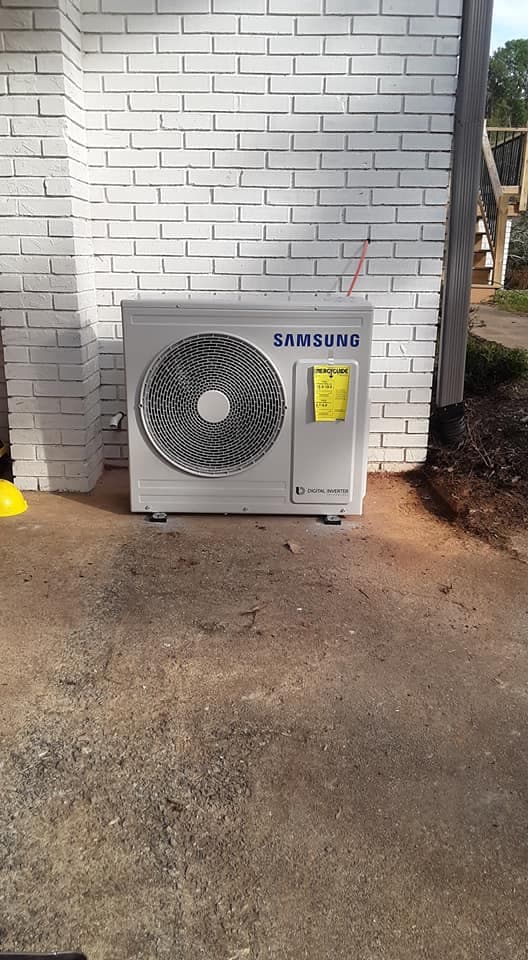
This is the situation where a mini-split makes clear sense. When there's no existing ductwork in a space, or when extending ductwork would require running through finished walls and ceilings at significant cost, a ductless mini-split gives you conditioning without the retrofit. One outdoor unit, one or two indoor heads, a line set through a small penetration in the wall. It can heat and cool. It can be zoned — the room runs at whatever setpoint you want, independent of the rest of the house. In heating mode, modern mini-splits with inverter-driven compressors run efficiently down to temperatures that WNC regularly sees in winter.
But the mini-split answer isn't always the right one, and we say that as a company that installs both.
If a home has an existing central system with available capacity — meaning the equipment was sized with some headroom, or a room was never added to the duct system but the equipment could handle it — extending ductwork may still be the better long-term choice. A single central system is simpler to maintain. One filter, one service interval, one piece of outdoor equipment. If the ductwork can be extended without major disruption and the equipment has capacity, that's worth evaluating seriously before committing to a second refrigerant system.
The cases where central air wins: newer homes with accessible attics or crawlspaces and existing ductwork that can reach the new space without significant pressure penalties. Additions with similar load characteristics to the rest of the house. Situations where a homeowner has already planned to replace the central system and sizing the new equipment to include the addition is part of the same project.
The cases where mini-splits win: old homes where running ductwork through finished plaster walls or tight attic cavities would cost more than the mini-split installation. Room additions, sunrooms, garage conversions, and bonus rooms where the existing system has no capacity or ductwork access. Mountain properties where zoning matters — a bedroom on the north side of a ridge home loses heat much faster than the south-facing common areas, and a system that treats the whole house identically will always be a compromise somewhere.
In WNC, the ridge-and-valley geography adds a layer to this. A house that straddles a temperature zone — south face comfortable, north face fighting — benefits from zoning in a way that a single-zone central system can't provide. Two mini-split heads on a multi-zone outdoor unit can run at different setpoints simultaneously. That's not a luxury; on an exposed property, it's just physics.
We look at the house. We look at the existing system if there is one. We ask about the budget and the long-term plan — are you staying, or selling in five years? We give you both options with honest numbers.
We come out. We look at what's there. We tell you what it costs.

About the Author
Vadim Melnic
Owner & Lead Technician, Fair Air Heating & Cooling·
EPA Section 608 Certified
Vadim has been serving the Asheville area since 2018, specializing in residential HVAC installation, service, and indoor air quality solutions. He founded Fair Air with a simple commitment: honest pricing, quality workmanship, and treating every home like his own.
Keep Reading
Related Articles
Your New System Isn't Performing the Way It Should — Here's Why
Rooms that were uneven before the installation were still uneven six months later. The system was running, conditioning the house, doing the basic job — but the efficiency improvement the contractor had sold on the front end hadn't materialized. The bills were marginally better,...
Duct Leakage — The Efficiency Problem Hiding in Your Crawl Space
The system is 18 SEER. The house performs like it's 11.
How Refrigerant Actually Works — Explained for People Who Don't Care About Refrigerant
She wanted to understand it. Most people don't ask.