

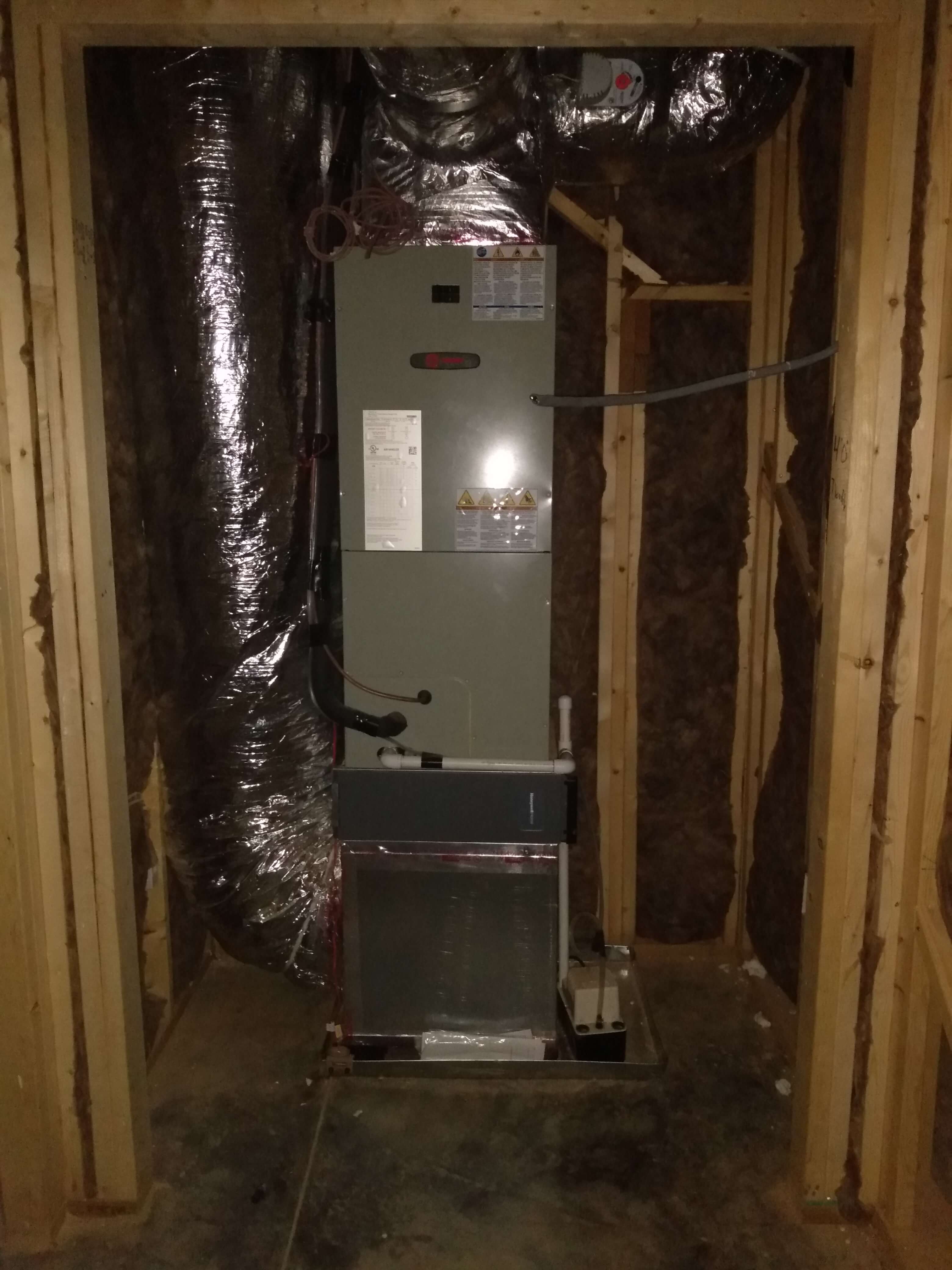
The Filter That's Choking Your System — MERV Ratings Explained
The filter was doing its job perfectly. That was the problem.
We swapped it out for a filter matched to the system — correct MERV rating for the blower capacity — and within an hour the short-cycling stopped. Airflow normalized. The system ran its full cycle without cutting out. The homeowner had spent two weeks thinking her AC was failing when what was actually failing was air's ability to get into the system at all.
She lives in Black Mountain, in a house about twelve years old with a standard residential air handler. A few months earlier she'd gone online looking for air quality information and found an article listing the best air filters for home use. The top recommendation was a MERV-13 filter — the kind used in hospitals and commercial spaces with high filtration demands. She bought a six-pack.
She'd been doing exactly the right thing, according to that list.
The MERV-13 filter was catching everything. Dust. Pollen. Fine particles. Under a flashlight it looked like a layer of gray felt after six weeks. If air quality was the goal, she'd nailed it. The problem was what happened on the other side of that dense filter material — the blower motor trying to pull air through a surface that was blocking it.
MERV stands for Minimum Efficiency Reporting Value. It's a scale from 1 to 16 that measures how effectively a filter captures particles of different sizes. A MERV-8 catches dust, pollen, mold spores. A MERV-11 adds finer particles, pet dander, some smoke. A MERV-13 approaches HEPA territory — it can capture particles as small as 0.3 to 1.0 microns, which is where viruses and fine combustion particles live.
The catch is resistance. Denser filtration means more material for air to pass through. Every filter creates what's called static pressure — resistance in the duct system that the blower has to work against. A standard residential blower is sized for a specific static pressure range. If that range is exceeded, airflow drops. When airflow drops far enough, the system starts short-cycling to protect itself from overheating. The evaporator coil can ice over. The heat exchanger in a furnace can overheat. The whole system labors.
The MERV-13 filter wasn't failing. It was performing exactly as designed. The blower just wasn't built to pull through that resistance, especially once the filter loaded up after a few weeks of WNC spring pollen. A MERV-8 in that same slot would have half the resistance. The blower would have pulled air through easily.
The right filter depends on your blower, your duct design, and your specific air quality needs. If you have pets or serious allergy concerns, a MERV-11 in a system designed for it is a reasonable choice. If you have an older system with a smaller motor, a MERV-8 changed regularly is better than a MERV-13 changed twice a year. There's no universal answer.
What we told her: the way to assess whether your filter is too restrictive is to hold your hand near a supply register while the system is running. If the airflow feels noticeably weak, the system is struggling. Change the filter regardless of how recently you put it in, and check the MERV rating against what your equipment manufacturer recommends. That number is in the manual. It's also something we can tell you in a service call.
The right filter for your specific system. That's the answer.

About the Author
Vadim Melnic
Owner & Lead Technician, Fair Air Heating & Cooling·
EPA Section 608 Certified
Vadim has been serving the Asheville area since 2018, specializing in residential HVAC installation, service, and indoor air quality solutions. He founded Fair Air with a simple commitment: honest pricing, quality workmanship, and treating every home like his own.
Keep Reading
Related Articles
Pollen Season in WNC — What It Does to Your Filter and Your System
The filter was only six weeks old. He pulled it out and held it up to the light coming through the kitchen window. No light came through.
Your New System Isn't Performing the Way It Should — Here's Why
Rooms that were uneven before the installation were still uneven six months later. The system was running, conditioning the house, doing the basic job — but the efficiency improvement the contractor had sold on the front end hadn't materialized. The bills were marginally better,...
Duct Leakage — The Efficiency Problem Hiding in Your Crawl Space
The system is 18 SEER. The house performs like it's 11.