
HVAC Service in Weaverville, NC — Valley Climate, Real Demands
By seven in the morning she's already checked the thermostat twice. The house feels colder than the setting. Not dramatically colder — just enough to make her wonder if the system ran at all overnight. She brews her coffee and stands near the kitchen supply vent and waits.
The system is fine. It ran all night. It's Weaverville in January — the valley pulled cold air down from the ridges and pooled it around the house while she slept, and the outdoor temperature at ground level was six degrees colder than the reading at the nearest weather station.
Her heating system is comfortable now. She stops checking the thermostat sometime around mid-February, when she's stopped expecting the cold to win.
Weaverville is a small town — Lake Louise in the middle, Main Street with its historic storefronts, Reems Creek Road climbing north toward the valley that gives the area much of its weather character. The Reems Creek Valley is a genuine cold-air drainage basin. On calm, clear nights, heavier cold air slides down from the surrounding ridges and collects on the valley floor. The result is that Weaverville regularly sees overnight temperatures several degrees below what the Asheville forecast suggests. For homeowners, that gap matters — a system sized for Asheville weather is slightly undersized for a valley-floor home in Weaverville in January.
The housing stock along Main Street and the older residential neighborhoods captures another layer of the challenge. Many of those homes were built in the mid-twentieth century, some earlier. Original ductwork was designed for the HVAC equipment of its time — often oversized for supply, undersized for return, with flex duct added to reach new rooms and register placement that made sense for oil furnace airflow patterns but not for modern heat pumps. When a new heat pump gets connected to old ductwork, the system has to work against restrictions it wasn't designed for.
We run ductwork diagnostics on older Weaverville homes routinely. Static pressure testing tells us what the system is actually seeing versus what it was designed to handle. The results sometimes surprise homeowners who have lived with slightly inadequate performance for years and assumed it was just the house.
Newer homes in Weaverville, particularly those north of town toward Reems Creek, have different exposures — more ridge terrain, more wind on open sites, varying construction quality depending on when they were built and who built them. We account for site-specific conditions on every load calculation we do. A house in the valley bottom isn't the same job as a house on a slope above Reems Creek Road.
Fair Air is based in Woodfin, which puts us about five minutes from downtown Weaverville. We're out here regularly — maintenance visits, system replacements, diagnostics on systems that have been struggling through cold winters. We know what the valley does to outdoor temperatures at night, and we size and service accordingly.
We come out. We look at what's there. We tell you what it costs. No pressure.
Weaverville, NC — Climate & HVAC Data
- Elevation: 2,146 ft
- Average January low: 28°F
- Average July high: 82°F
- Heating degree days: ~4,300/year
- Cooling degree days: ~800/year
- Reference weather station: Asheville Regional Airport (USW00003812)
- From our shop: 10 miles / about 18 minutes from our shop
What That Means for Your System
Weaverville sits in the Reems Creek Valley north of Asheville, in the shadow of the Craggy Mountains and the Black Mountain range. Cold air from these higher elevations drains into the valley on calm winter nights, making Weaverville lows consistently 2–4°F colder than downtown Asheville despite nearly identical elevation.
The cold air pooling effect in the Reems Creek Valley means a heat pump sized using Asheville airport data may underperform on the coldest winter mornings. We factor in the valley drainage effect when sizing systems for Weaverville homes, particularly those on the valley floor along Reems Creek Road.
Common HVAC Issues We See Here
- Valley-floor homes along Reems Creek experiencing 2–4°F colder lows than Asheville — heat pumps need properly sized backup heat
- Newer subdivisions on the ridges above town exposed to wind-driven heat loss on northwest faces
- Older homes in downtown Weaverville with undersized ductwork from retrofit installations
- Higher elevation properties toward Ox Creek approaching 3,000 ft with significantly greater heating demand
Service Details
- Response time: 10 miles / about 18 minutes from our shop
- Service area coverage: All of Weaverville, Reems Creek, Flat Creek, Ox Creek, Barnardsville Road corridor
- Service type: Installation, repair, and maintenance — all makes and models
Call 828-774-8614 or book online. No pressure, no upsells — just honest answers from a local team that knows this area.

About the Author
Vadim Melnic
Owner & Lead Technician, Fair Air Heating & Cooling·
EPA Section 608 Certified
Vadim has been serving the Asheville area since 2018, specializing in residential HVAC installation, service, and indoor air quality solutions. He founded Fair Air with a simple commitment: honest pricing, quality workmanship, and treating every home like his own.
Keep Reading
Related Articles
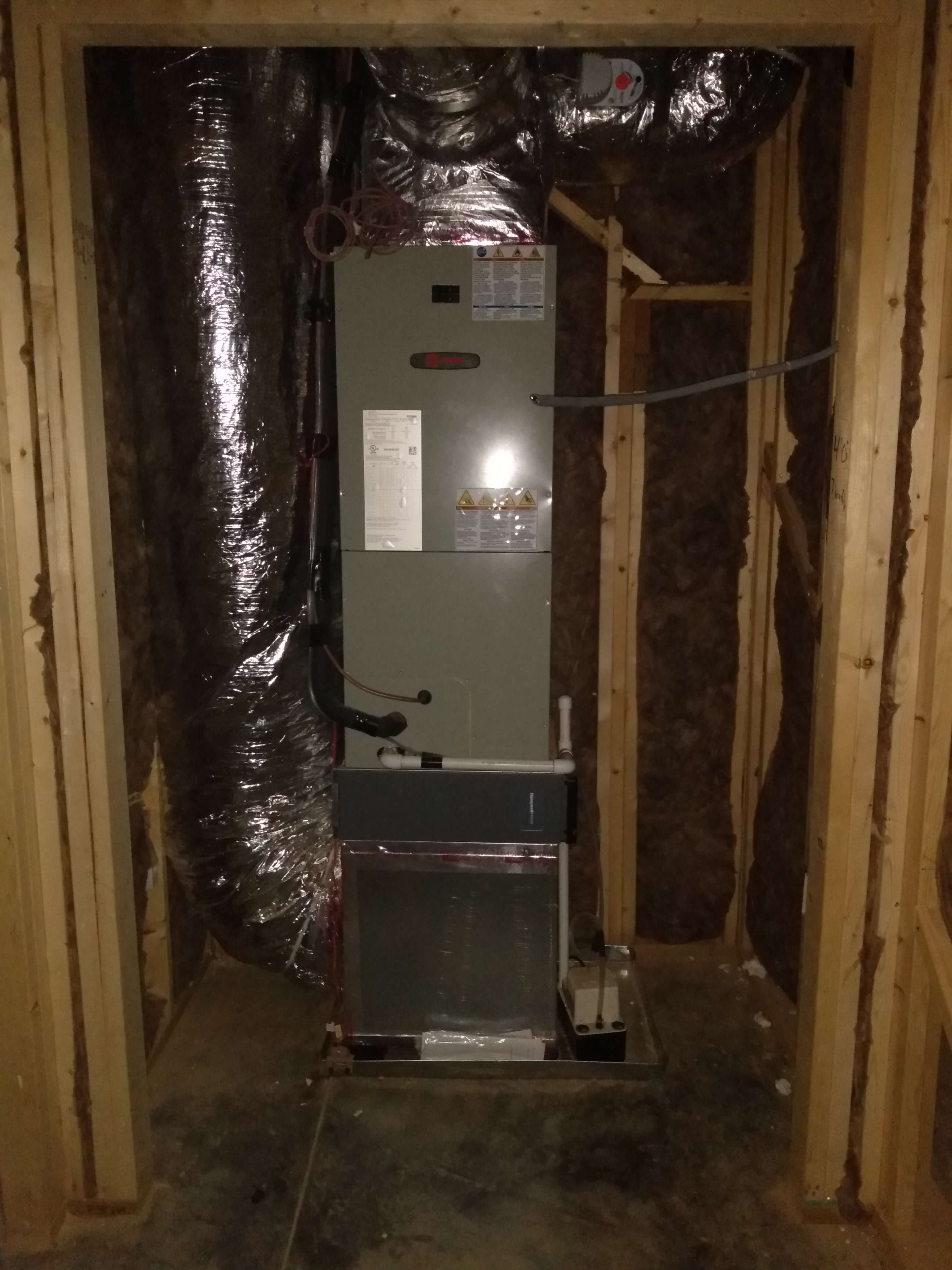
What a Proper HVAC Installation Actually Looks Like — Step by Step
Most people aren't in the room when their HVAC gets installed. They sign the contract, go to work, and come home to a system that either performs correctly or doesn't — and if it doesn't, they usually don't know what was skipped.
The Shoulder Season Problem — When WNC Can't Decide What Month It Is
They don't argue about the thermostat in July. In July the answer is obvious. They argue about it in October, when it's 68° by noon and 41° by midnight and whatever they set at 7 AM is wrong by 4 PM.
Pollen Season in WNC — What It Does to Your Filter and Your System
The filter was only six weeks old. He pulled it out and held it up to the light coming through the kitchen window. No light came through.