

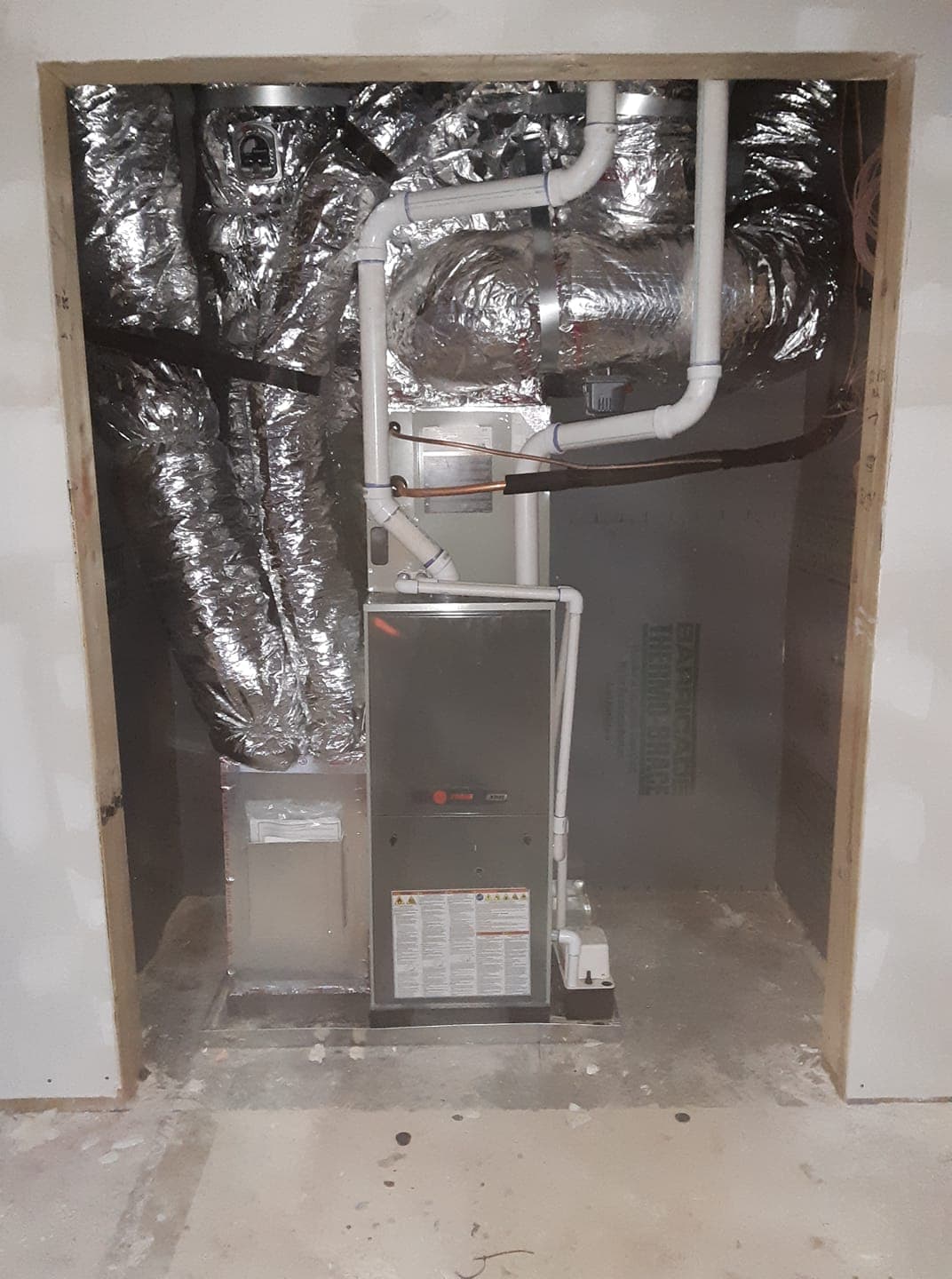
HVAC in Asheville, NC — What the Weather Here Actually Demands
She opens the back door and the kitchen drops four degrees. Not because something's broken. Because that's what an uninsulated 1924 door frame does in October in Asheville, when the temperature swings forty degrees between morning and afternoon and the fog sits in the French Broad corridor until ten.
Her HVAC system has been handling this for years. She's never thought much about it. It runs, it heats, it cools — mostly. But every October the shoulder season arrives and the system seems confused, cycling on and off through the day as the outdoor temperature chases the setpoint back and forth. By the time she calls us, she's usually already put on the first sweater of the season and started wondering if something's wrong.
Sometimes something is. More often, it's just Asheville.
Asheville sits at around 2,134 feet in elevation — high enough to make the summers genuinely pleasant compared to the Carolinas piedmont, but also high enough to make the winters real. What the elevation statistics don't capture is the variability. Western North Carolina weather is layered. River Arts District mornings in March can feel like February. Kenilworth gets the full sun and dries out fast. North Asheville, up in the hills above Merrimon Avenue, runs a few degrees cooler than the valley on still winter nights. West Asheville, denser with older housing stock, has its own microclimate depending on which ridge you're on.
And then there's the housing. Asheville has more early-twentieth-century craftsman bungalows per capita than almost anywhere in the South. Those houses are beautiful. They were also built before duct systems, before insulation standards, before anyone was thinking about heat load calculations. Many of them have been retrofitted multiple times — window units gave way to central systems, electric baseboard gave way to heat pumps, ductwork was run wherever it would fit. The result is often a patchwork: a 2-ton system in a house that needs a 2.5, or a correctly sized system attached to a duct system losing 30% of its conditioned air into an unconditioned attic.
Newer construction in Asheville has its own challenges. Tighter envelopes trap humidity. Mixed-use and creative-space buildings in the River Arts District have irregular load profiles — large glass frontage, high ceilings, inconsistent occupancy. What works as a rule of thumb for a suburban ranch doesn't apply here.
HVAC in Asheville, NC has to account for all of it. The elevation. The microclimate variation. The housing stock that ranges from 1920s plaster-wall construction to brand-new builds with spray foam insulation. The late spring frosts that can catch you if you've already switched the system to cooling mode. The October swings.
We've been serving Asheville and the surrounding WNC communities since 2018. Our office is in Woodfin, about ten minutes north of downtown. We know the neighborhoods, we know what the older houses look like inside the walls, and we know how the weather here actually behaves — not how the spec sheet assumes it behaves.
We come out. We look at what's there. We tell you what it costs. No pressure.
Asheville, NC — Climate & HVAC Data
- Elevation: 2,134 ft
- Average January low: 29°F
- Average July high: 84°F
- Heating degree days: 4,195/year
- Cooling degree days: 863/year
- Reference weather station: Asheville Regional Airport (USW00003812)
- From our shop: We are local — based right here in Asheville
What That Means for Your System
Asheville sits at the confluence of the French Broad and Swannanoa Rivers in a broad mountain basin. The basin promotes descending air that moderates precipitation, but the surrounding mountains create significant temperature variation across neighborhoods. A home on Town Mountain at 3,100 ft has a fundamentally different heating load than a house in the River Arts District at 2,000 ft.
The 1,100-foot elevation spread within city limits means there is no single "Asheville climate" for HVAC sizing. We use neighborhood-specific design temperatures, not citywide averages. Downtown properties near the French Broad benefit from river valley moderation; north-facing slopes in North Asheville lose heat faster and need more heating capacity.
Common HVAC Issues We See Here
- Older Montford and West Asheville homes with original ductwork running through uninsulated crawl spaces — up to 30% conditioned air loss
- Town Mountain and Grove Park area homes at 2,800–3,100 ft need heat pump supplemental heat sized for colder temps than valley homes
- River Arts District properties near the French Broad experience higher summer humidity — dehumidification is often necessary
- Historic homes with plaster walls and no wall cavities make ductless mini-splits the practical choice for additions and renovations
Service Details
- Response time: We are local — based right here in Asheville
- Service area coverage: All of Asheville, West Asheville, North Asheville, South Slope, River Arts District, Montford, Kenilworth, Grove Park
- Service type: Installation, repair, and maintenance — all makes and models
Call 828-774-8614 or book online. No pressure, no upsells — just honest answers from a local team that knows this area.

About the Author
Vadim Melnic
Owner & Lead Technician, Fair Air Heating & Cooling·
EPA Section 608 Certified
Vadim has been serving the Asheville area since 2018, specializing in residential HVAC installation, service, and indoor air quality solutions. He founded Fair Air with a simple commitment: honest pricing, quality workmanship, and treating every home like his own.
Keep Reading
Related Articles
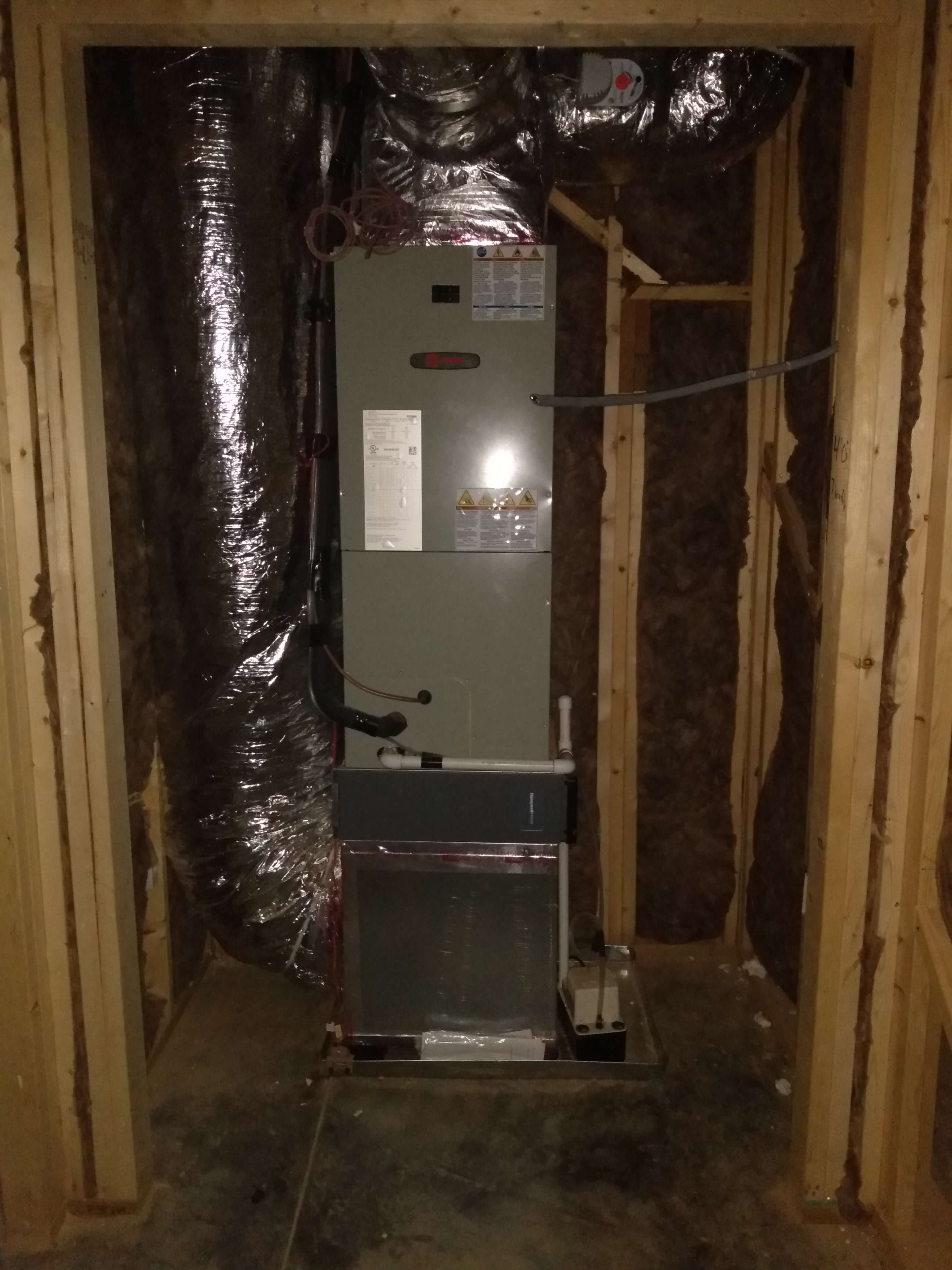
What a Proper HVAC Installation Actually Looks Like — Step by Step
Most people aren't in the room when their HVAC gets installed. They sign the contract, go to work, and come home to a system that either performs correctly or doesn't — and if it doesn't, they usually don't know what was skipped.
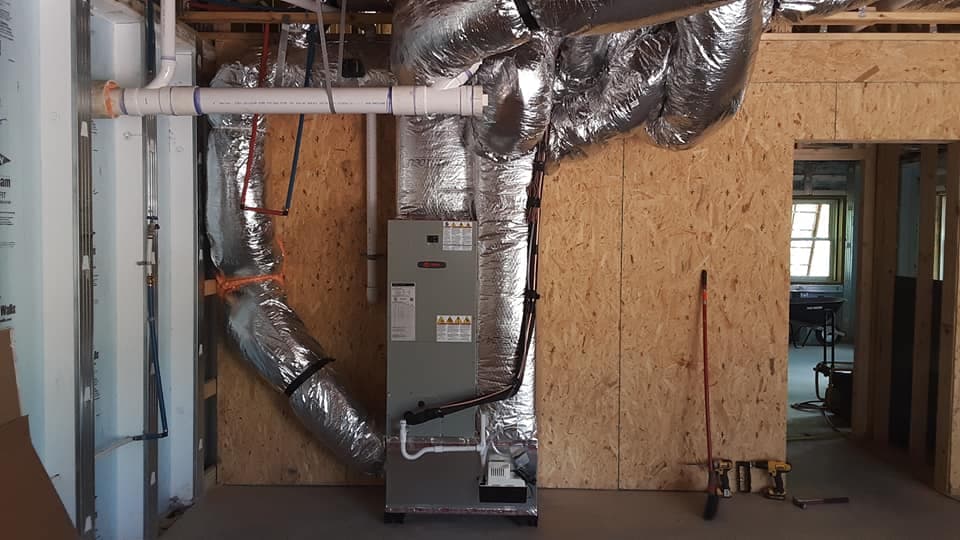
The Shoulder Season Problem — When WNC Can't Decide What Month It Is
They don't argue about the thermostat in July. In July the answer is obvious. They argue about it in October, when it's 68° by noon and 41° by midnight and whatever they set at 7 AM is wrong by 4 PM.
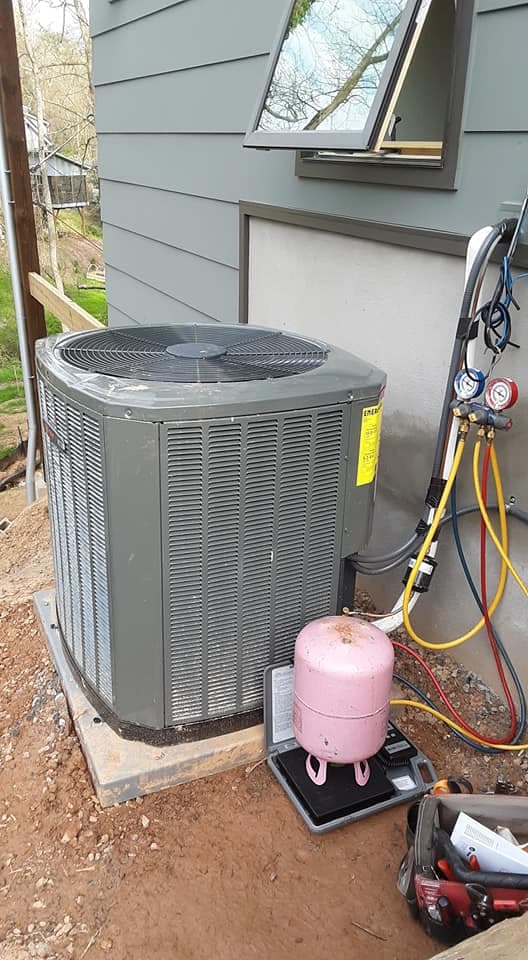
Pollen Season in WNC — What It Does to Your Filter and Your System
The filter was only six weeks old. He pulled it out and held it up to the light coming through the kitchen window. No light came through.