

HVAC in Fairview, NC — Farm Country Has Its Own Demands
She goes out to the barn before breakfast every morning. She's done this for thirty years. The cold in the barn is expected — it's a barn. The cold inside the house when she came back in used to be almost as bad. That was the part she didn't like.
The second winter after the system replacement, she noticed she was coming in from the barn and actually warming up. Not just tolerating. The house was warm. She made her coffee and stood in the kitchen and felt the difference.
Fairview is a community of about 3,000 people tucked into the hills southeast of Asheville along Cane Creek Road and the surrounding rural routes. It's agricultural in character — real farms, not hobby farms, mixed with newer residential development that's been filling in the gaps over the last couple decades. The older housing stock is farmhouse construction: thick exterior walls, minimal insulation by modern standards, windows that have been replaced once or twice but still leak around the frames. Solid bones. Cold interiors.
The Cane Creek corridor is the key terrain feature for understanding Fairview's HVAC demands. The creek runs through a valley that collects cold air on still winter nights in the same way that any drainage basin does in the mountains — the cold descends from the surrounding ridges and settles. Valley-floor properties near Cane Creek can see overnight temperatures significantly lower than the Buncombe County average. In summer, the creek corridor holds humidity — not oppressively, but enough to matter for dehumidification loads and for any home where moisture management is a consideration.
The older farmhouses in Fairview were built for wood stove and later oil or propane heat — point-source systems that kept people alive but not comfortable by any modern standard. Many of them were retrofitted for central heat and air over the decades, with ductwork run wherever it would fit: crawlspaces with minimal insulation, attic runs in spaces that get far too hot in summer. A system pushing conditioned air through an uninsulated crawlspace duct in January loses a significant fraction of its output before the air reaches a register.
We do a lot of crawlspace ductwork assessment in Fairview homes. The insulation situation under those old farmhouses is often surprising even to the homeowners who have lived there for years — they know the house runs cold, but they've attributed it to the old windows or the drafty doors, not to a duct system that's conditioning the ground under the crawlspace.
Newer construction in Fairview, up on the ridges and in the subdivisions along Cane Creek Road, has a different set of considerations — better envelopes, but often more exposed sites and building orientations that weren't carefully evaluated for solar gain and wind.
Fair Air serves Fairview as part of our eastern Buncombe service territory. It's a community we visit regularly.
We come out. We look at what's there. We tell you what it costs. No pressure.
Fairview, NC — Climate & HVAC Data
- Elevation: 2,434 ft
- Average January low: 27°F
- Average July high: 84°F
- Heating degree days: ~4,550/year
- Cooling degree days: ~650/year
- Reference weather station: Asheville 8 SSW (USW00053877)
- From our shop: 12 miles / about 17 minutes from our shop
What That Means for Your System
Fairview sits in southeastern Buncombe County along US-74A (Charlotte Highway) at a notably higher average elevation than Asheville. The Cane Creek Valley corridor runs through the community, with rolling terrain of farmland, pastures, and wooded ridges. Ridge-top properties can exceed 3,000 feet.
Fairview has the highest estimated heating degree days of the close-in Asheville suburbs — about 350 HDD more than downtown. The combination of higher elevation and exposure means winter comes earlier and stays longer here. Heat pump systems need to be sized for Fairview-specific conditions, not Asheville averages.
Common HVAC Issues We See Here
- Ridge-top properties above 2,800 ft with 5–8°F colder winter temps than Asheville — supplemental heat sizing is critical
- Rural homes with long propane supply chains that could benefit from electric heat pump conversion
- Cane Creek Valley floor experiencing cold air pooling similar to Leicester — lows colder than elevation alone suggests
- Newer construction in Fairview subdivisions sometimes installed with systems sized for Asheville data instead of local conditions
Service Details
- Response time: 12 miles / about 17 minutes from our shop
- Service area coverage: All of Fairview, Cane Creek Valley, Gerton, Bat Cave Road, Charlotte Highway corridor
- Service type: Installation, repair, and maintenance — all makes and models
Call 828-774-8614 or book online. No pressure, no upsells — just honest answers from a local team that knows this area.
About the Author
Vadim Melnic
Owner & Lead Technician, Fair Air Heating & Cooling·
EPA Section 608 Certified
Vadim has been serving the Asheville area since 2018, specializing in residential HVAC installation, service, and indoor air quality solutions. He founded Fair Air with a simple commitment: honest pricing, quality workmanship, and treating every home like his own.
Keep Reading
Related Articles
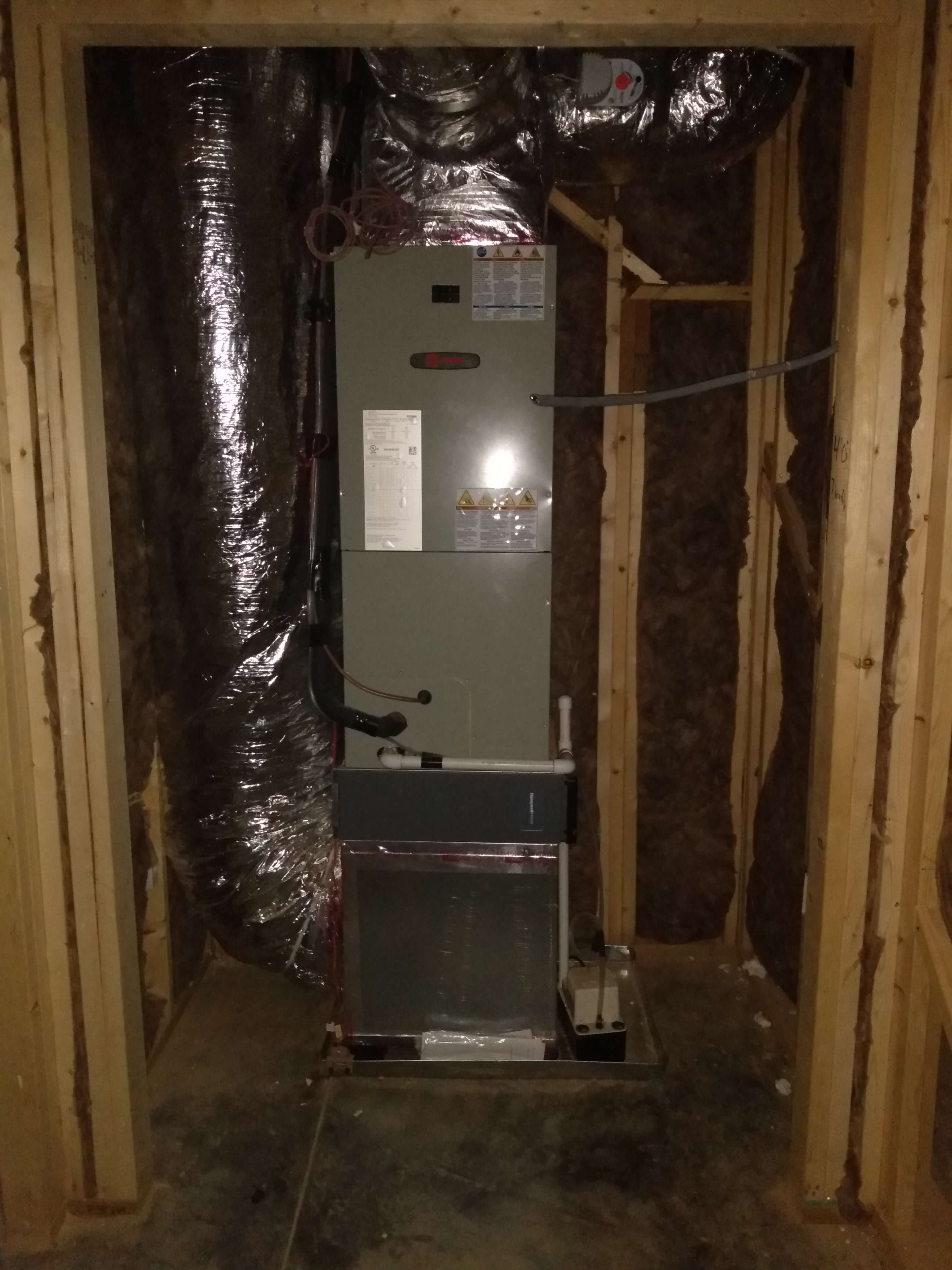
What a Proper HVAC Installation Actually Looks Like — Step by Step
Most people aren't in the room when their HVAC gets installed. They sign the contract, go to work, and come home to a system that either performs correctly or doesn't — and if it doesn't, they usually don't know what was skipped.
The Shoulder Season Problem — When WNC Can't Decide What Month It Is
They don't argue about the thermostat in July. In July the answer is obvious. They argue about it in October, when it's 68° by noon and 41° by midnight and whatever they set at 7 AM is wrong by 4 PM.
Pollen Season in WNC — What It Does to Your Filter and Your System
The filter was only six weeks old. He pulled it out and held it up to the light coming through the kitchen window. No light came through.