

Black Mountain HVAC — Mountain Weather at the Foot of Mount Mitchell
She opens the front door on a September morning and the air is twenty degrees cooler than it was yesterday. She stands on the porch for a moment. It smells like fall. In Black Mountain, fall comes the way a door closes — suddenly, completely.
The heat kicks on that morning for the first time since April. It runs correctly. She doesn't have to think about it. That's the whole point.
Black Mountain sits in the Swannanoa Valley at the base of the Black Mountain range, which includes Mount Mitchell — the highest peak east of the Mississippi at over 6,600 feet. That proximity shapes everything about the local climate. Cold air from those elevations drains into the valley. Thunderstorms that build over the high country funnel down the valley toward Swannanoa and Black Mountain with particular force. The elevation of the town itself, around 2,400 feet, means the baseline climate is already several degrees cooler than Charlotte or Raleigh — and the mountains behind it amplify that.
The weather swings in Black Mountain are real. A warm October afternoon of 70 degrees can become a 32-degree morning by the following week. Late spring frosts arrive after plants have started growing. Summer thunderstorms hit hard and fast. The system that handles comfort here has to be responsive across a wide range, not optimized for a narrow one.
The residential character of Black Mountain is diverse — Cherry Street downtown and the neighborhoods around it contain older bungalows and craftsman-era homes from the early and mid twentieth century, many of which have been updated with modern systems but still carry the duct challenges of retrofit work in older construction. The ridge neighborhoods above town, with views back toward Asheville, tend toward newer custom builds that are better insulated but more exposed to the mountain weather.
NC-9 heading south out of Black Mountain and the residential streets above the downtown corridor mix housing vintages in a way that keeps the diagnostic work interesting. A 1940s bungalow three doors down from a 2010 construction has essentially nothing in common from an HVAC standpoint beyond the fact that they're in the same zip code.
The proximity to the Black Mountain range matters for heat pump performance in winter. Below-freezing temperatures come more often and stay longer here than in Asheville. Heat pump efficiency drops as outdoor temperatures drop. A system sized for "WNC average" conditions may be undersized for a Black Mountain winter — particularly for homes at higher elevations on the ridge streets above town. Supplemental heat backup sizing is something we look at carefully here.
Fair Air services Black Mountain and the surrounding Swannanoa Valley. We know the terrain and what it does to HVAC performance.
We come out. We look at what's there. We tell you what it costs. No pressure.
Black Mountain, NC — Climate & HVAC Data
- Elevation: 2,333 ft
- Average January low: 27°F
- Average July high: 83°F
- Heating degree days: ~4,550/year
- Cooling degree days: ~650/year
- Reference weather station: Asheville 8 SSW (USW00053877)
- From our shop: 16 miles / about 18 minutes — same-day service
What That Means for Your System
Black Mountain sits in the upper Swannanoa River Valley at the base of the Black Mountain range, which includes Mount Mitchell — the highest peak east of the Mississippi at 6,684 feet. Cold air from those elevations drains into the valley. The Seven Sisters range (peaks 3,680–5,260 ft) frames the town to the north, and the Swannanoa Mountains rise to the south.
The cold air drainage from Mount Mitchell and the Black Mountains produces winter lows that are consistently colder than Asheville — often 5–8°F colder on calm, clear nights. A heat pump sized using Asheville climate data will be undersized for a Black Mountain home, especially on ridge streets above 2,600 ft. We use Black Mountain-specific design temperatures for every installation.
Common HVAC Issues We See Here
- Heat pumps running auxiliary heat too frequently due to cold air pooling — drives electric bills 20–40% above expected
- Older Cherry Street bungalows with undersized ductwork from 1960s–70s retrofit installations
- Ridge homes above downtown exposed to northwest wind-driven heat loss in winter
- Summer humidity in the valley floor causing coil icing on under-maintained systems
Service Details
- Response time: 16 miles / about 18 minutes — same-day service
- Service area coverage: All of Black Mountain, Ridgecrest, Montreat, Swannanoa Valley, NC-9 corridor south to Bat Cave
- Service type: Installation, repair, and maintenance — all makes and models
Call 828-774-8614 or book online. No pressure, no upsells — just honest answers from a local team that knows this area.

About the Author
Vadim Melnic
Owner & Lead Technician, Fair Air Heating & Cooling·
EPA Section 608 Certified
Vadim has been serving the Asheville area since 2018, specializing in residential HVAC installation, service, and indoor air quality solutions. He founded Fair Air with a simple commitment: honest pricing, quality workmanship, and treating every home like his own.
Keep Reading
Related Articles
What a Proper HVAC Installation Actually Looks Like — Step by Step
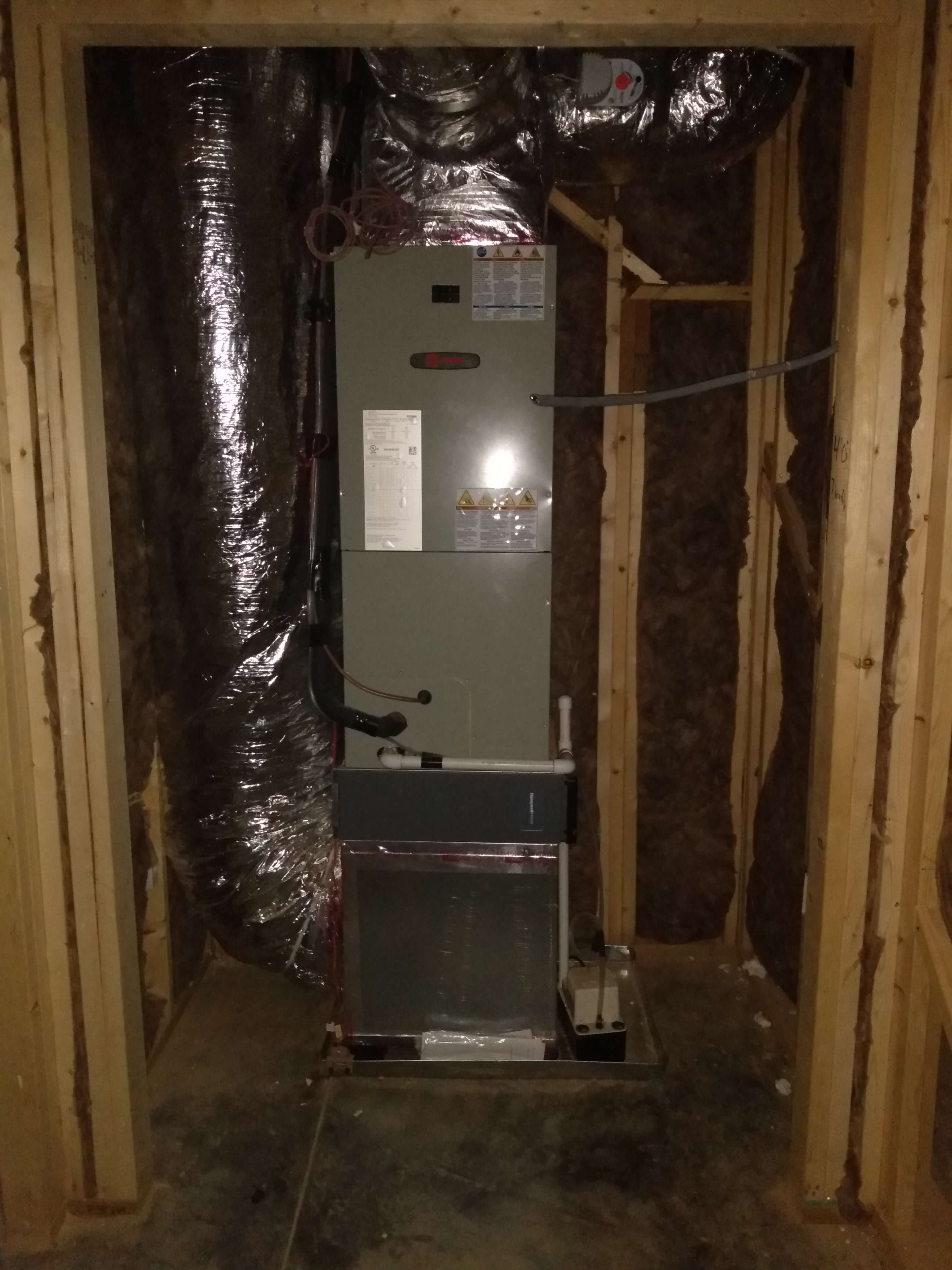
Most people aren't in the room when their HVAC gets installed. They sign the contract, go to work, and come home to a system that either performs correctly or doesn't — and if it doesn't, they usually don't know what was skipped.
The Shoulder Season Problem — When WNC Can't Decide What Month It Is
They don't argue about the thermostat in July. In July the answer is obvious. They argue about it in October, when it's 68° by noon and 41° by midnight and whatever they set at 7 AM is wrong by 4 PM.
Pollen Season in WNC — What It Does to Your Filter and Your System
The filter was only six weeks old. He pulled it out and held it up to the light coming through the kitchen window. No light came through.