

The Capacitor That Told Us Everything Before We Asked
She'd called for a maintenance visit. Not a repair. Just the annual check — the one she books every year in late spring, before the heat arrives and she needs the system to actually work.
She's the kind of homeowner we appreciate: organized, consistent, doesn't wait until something breaks to pick up the phone. Her unit had been serviced regularly. She kept a folder with every service record.
She didn't spend July without air conditioning.
It was July in Asheville. The kind of day that starts humid and gets worse, where the sky goes white by ten in the morning and the air sits on you. The house was already 68 degrees when we arrived because she keeps it cool in the morning before the day hits. The kind of house that runs the way a well-maintained system should — quiet, steady, hitting temperature and shutting off cleanly.
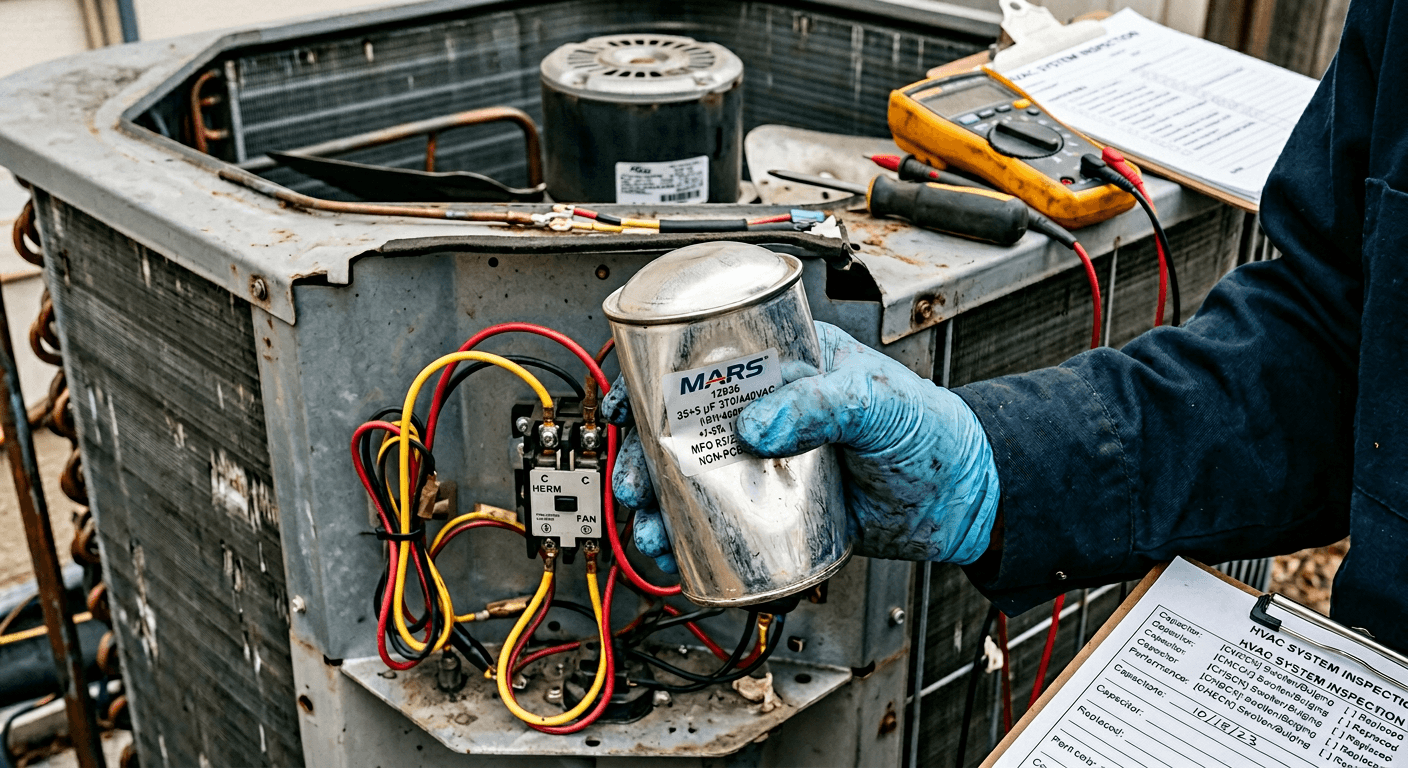
We started at the condenser unit. Pulled the panel, worked through the checklist — contactors, wiring connections, refrigerant pressures, fan blade condition. When the tech reached in to check the capacitor, he got one hand around it and the casing deformed in his grip.
Not cracked. Not leaking. Deformed — the side wall buckling under finger pressure, the top dome swollen past its original profile. A capacitor that was structurally compromised, the kind of failure that happens when the internal electrolyte has been cooking in the heat for too long and the unit has been degrading cycle by cycle all season.
A swollen capacitor still passes current — until it doesn't. The system can run, imperfectly, right up until the moment the component fails completely. Then: no start. No air conditioning. A service call in the middle of the week when every HVAC company in Western North Carolina has a full board.
Capacitors fail progressively. The readings degrade, the casing stresses, the motor start torque drops and the compressor drags harder to compensate. Sometimes a homeowner notices — the system runs longer, seems like it's working harder. Sometimes they don't notice at all. This one had days left, maybe less.
We had one in the truck. Standard maintenance stock — we carry common capacitor values because we find this exact situation regularly enough that it's not surprising when we do.
Fifteen minutes. She went back inside while we swapped it and ran the system through a full cycle.
One part. Fifteen minutes. That was the difference between a maintenance visit and a repair call in two weeks.

About the Author
Vadim Melnic
Owner & Lead Technician, Fair Air Heating & Cooling·
EPA Section 608 Certified
Vadim has been serving the Asheville area since 2018, specializing in residential HVAC installation, service, and indoor air quality solutions. He founded Fair Air with a simple commitment: honest pricing, quality workmanship, and treating every home like his own.
Keep Reading
Related Articles
What a Proper HVAC Installation Actually Looks Like — Step by Step
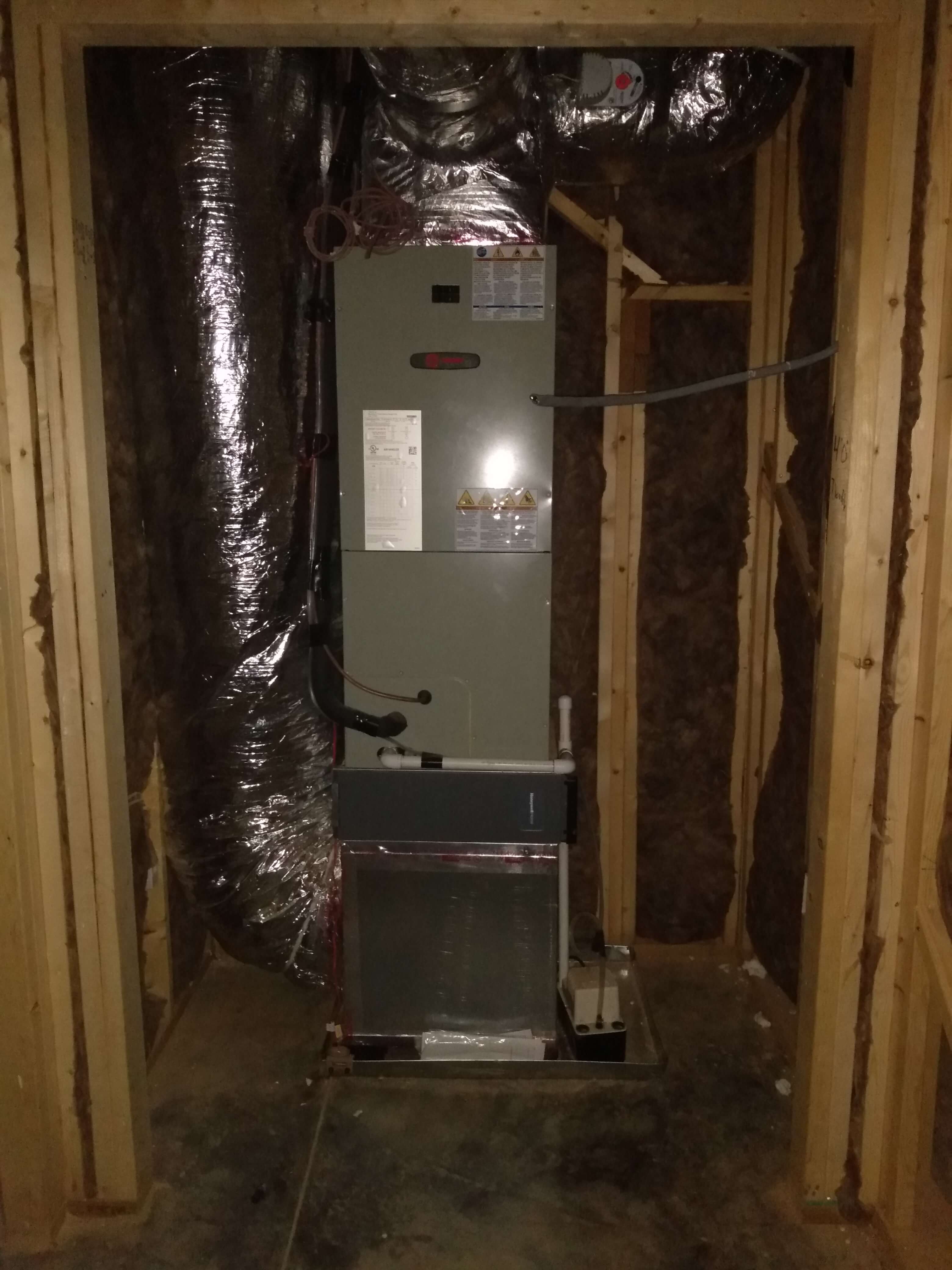
Most people aren't in the room when their HVAC gets installed. They sign the contract, go to work, and come home to a system that either performs correctly or doesn't — and if it doesn't, they usually don't know what was skipped.
The Shoulder Season Problem — When WNC Can't Decide What Month It Is
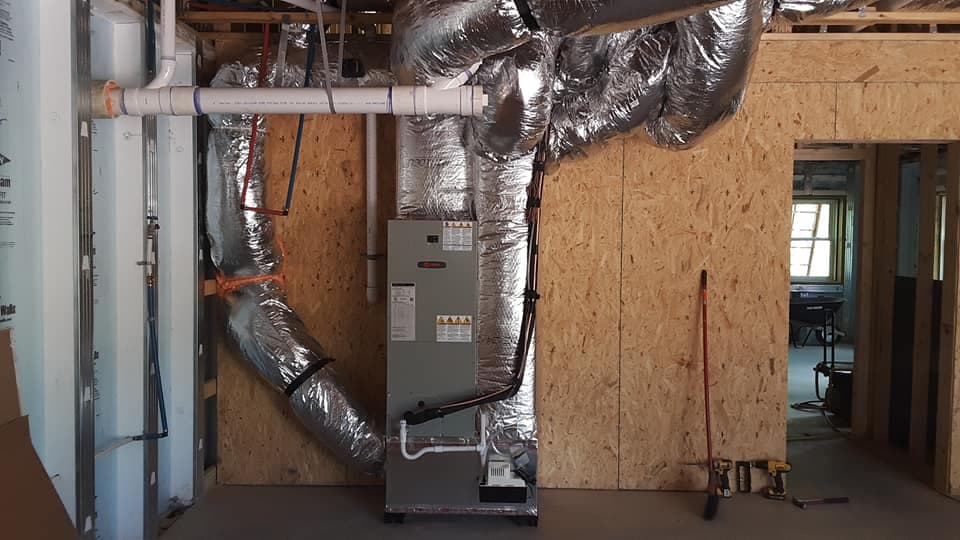
They don't argue about the thermostat in July. In July the answer is obvious. They argue about it in October, when it's 68° by noon and 41° by midnight and whatever they set at 7 AM is wrong by 4 PM.
Pollen Season in WNC — What It Does to Your Filter and Your System
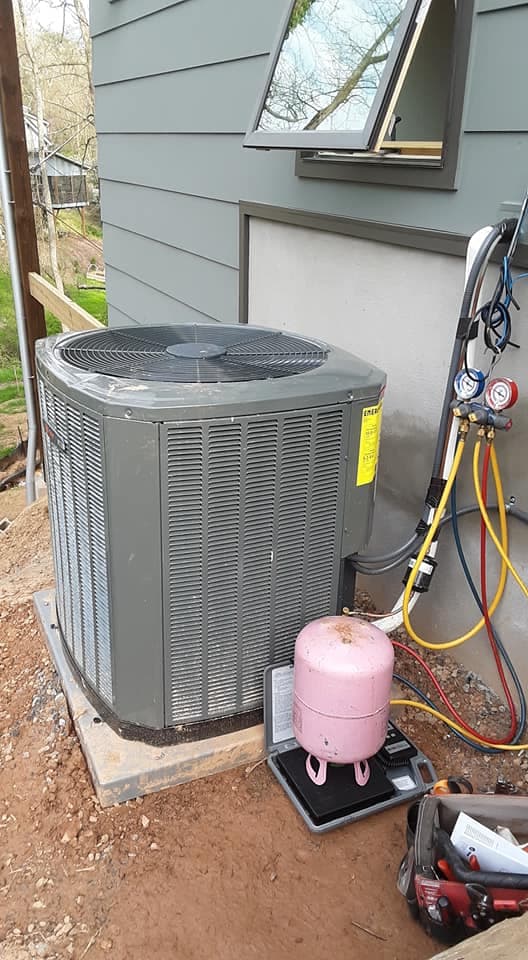
The filter was only six weeks old. He pulled it out and held it up to the light coming through the kitchen window. No light came through.