

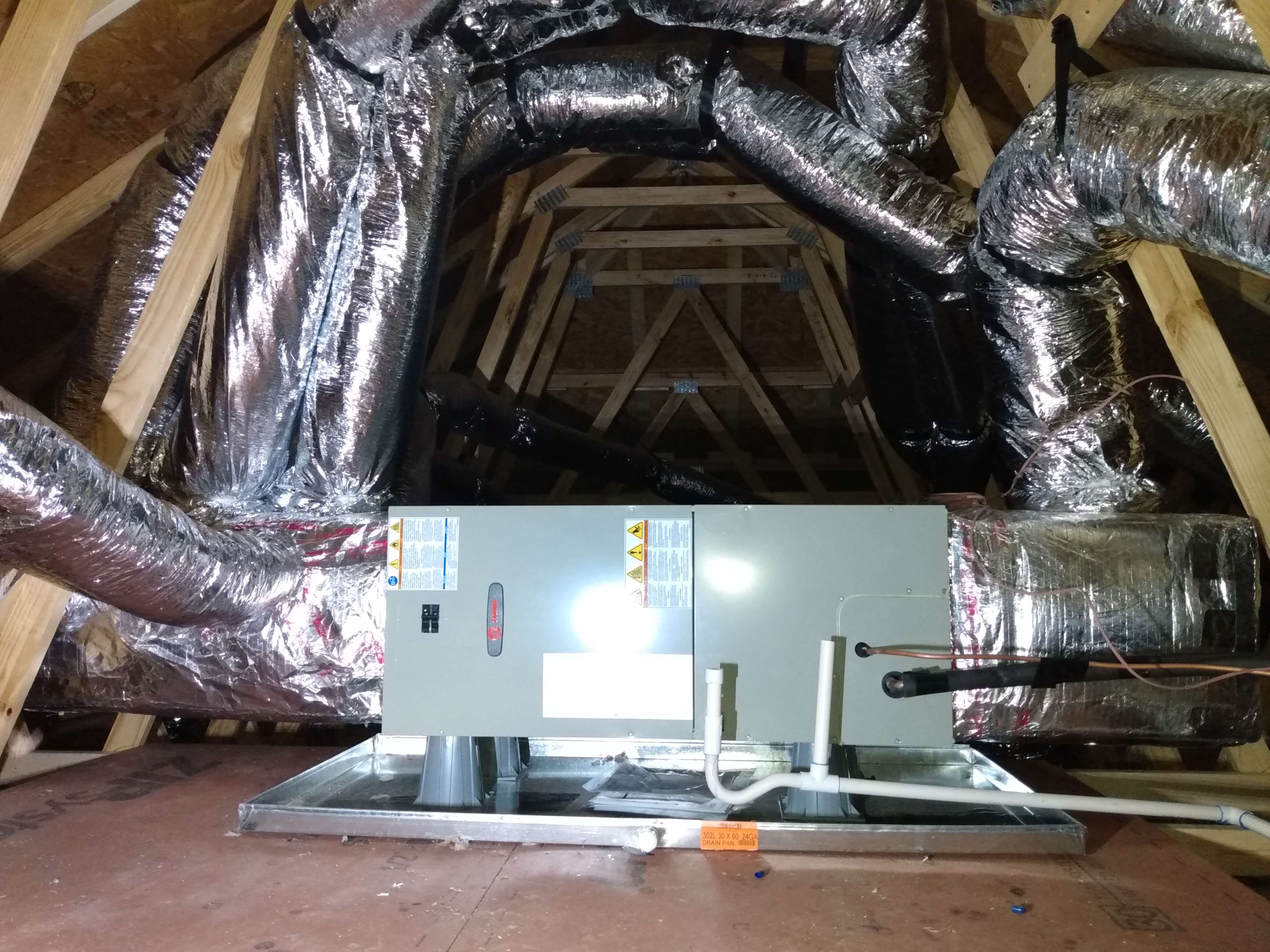
What Energy Star Certification Actually Requires of an HVAC Company
She asked us to explain it. Nobody had before.
She'd gotten quotes from three contractors. All three had Energy Star logos somewhere in their materials. One was on a truck magnet. One was on letterhead. Ours was on a certificate posted in the office and referenced on the proposal. She was the first homeowner in a long time who'd looked at that and asked: what does that actually mean for the job you're going to do in my house?
She lives in Black Mountain, in a well-kept home she's owned for fifteen years. She'd done her homework. She'd read about SEER ratings and heat pump efficiency and refrigerant transitions. She knew roughly what equipment she wanted. What she hadn't found in her research was what Energy Star means when it applies to the contractor rather than the equipment.
Energy Star for HVAC equipment is the label on the box — the manufacturer's unit meeting a minimum efficiency threshold. That's the label people recognize. What's different is Energy Star certification for the contractor, which is administered through the ENERGY STAR Certified Homes and Buildings program and requires verified installation quality — not just equipment brand.
To maintain certification, an HVAC contractor must perform a Manual J load calculation on every new installation. Not a rule-of-thumb estimate based on square footage. A room-by-room heat gain and loss calculation that accounts for insulation R-values, window area and orientation, infiltration rate, internal heat gains, and local design temperatures. Manual J is the ACCA standard — it takes time, it requires real input data about the house, and it produces an equipment sizing recommendation based on the actual heat load rather than habit.
Duct leakage testing is required. Every new system installation receives a post-installation duct leakage test, measured with a duct blaster, and the results are documented. If leakage exceeds the standard — typically 4 to 8 percent of system airflow depending on the program version — the ducts need to be sealed until the system passes. The test result goes in the file.
Refrigerant charge must be verified at startup using appropriate measurements — superheat for fixed-orifice systems, subcooling for thermostatic expansion valve systems — taken with calibrated gauges under operating conditions. A system charged to nameplate specification in March and never verified at operating temperatures isn't commissioned. It's guessed.
The whole process generates documentation. A commissioning checklist that covers equipment installation, electrical connections, duct installation quality, airflow, and charge verification. That documentation doesn't go away. It's the paper trail that demonstrates the system was installed to a standard.
This matters practically because HVAC systems underperform for reasons that have nothing to do with equipment quality. Oversized or undersized equipment, leaky ducts, incorrect charge — these are installation variables that proper commissioning catches. A contractor who skips these steps and installs high-efficiency equipment into an unverified system isn't delivering the efficiency the equipment is rated for.
The certification doesn't mean we're perfect. It means every installation goes through the same verified process, documented, with a standard to meet rather than a feeling to satisfy.
The certification is a promise about how we do the work. Not just what equipment we sell.

About the Author
Vadim Melnic
Owner & Lead Technician, Fair Air Heating & Cooling·
EPA Section 608 Certified
Vadim has been serving the Asheville area since 2018, specializing in residential HVAC installation, service, and indoor air quality solutions. He founded Fair Air with a simple commitment: honest pricing, quality workmanship, and treating every home like his own.