

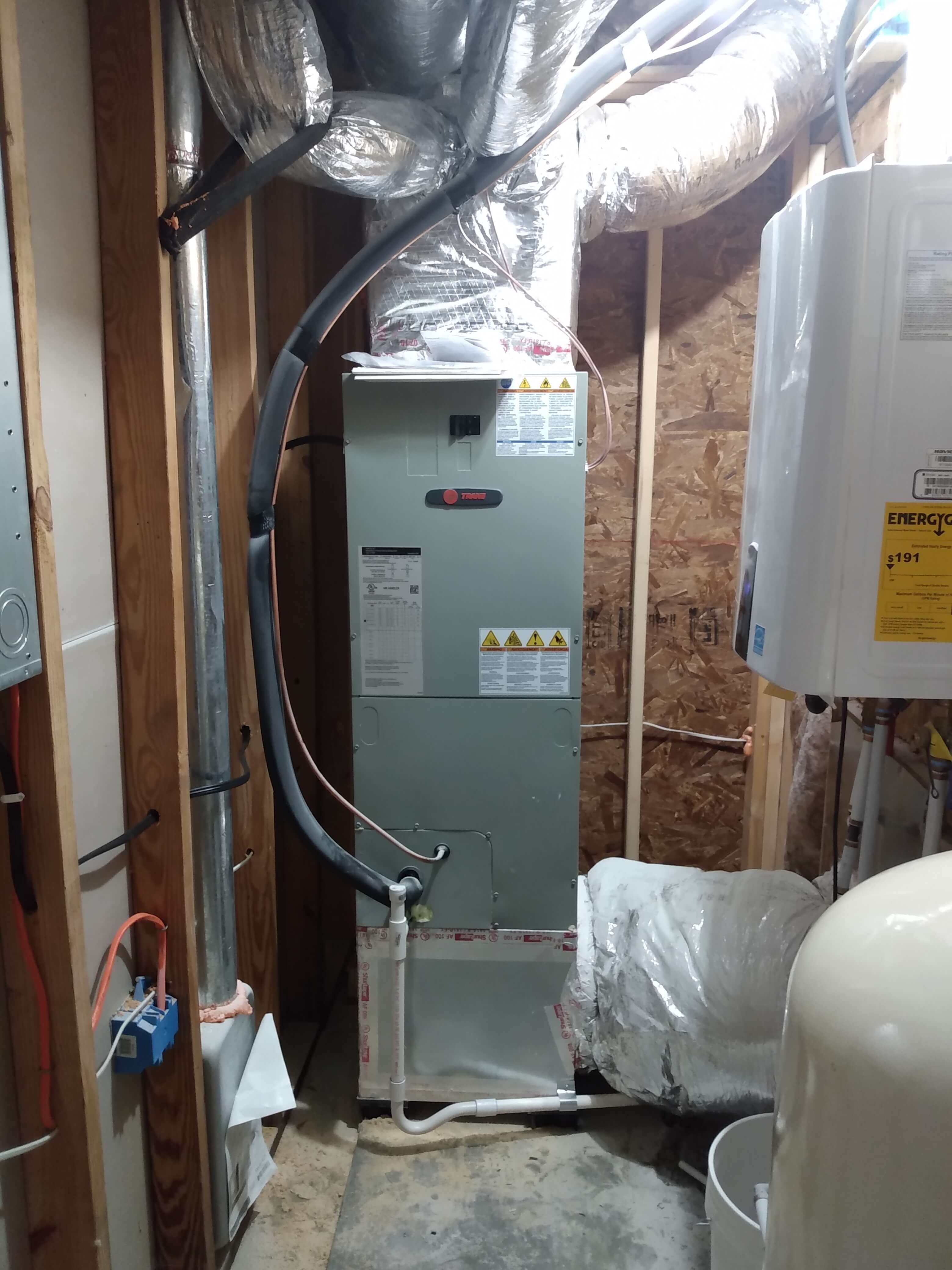
The Asheville Craftsman With the Ductwork Nobody Designed
The duct run ended 8 inches from the register. Just stopped. Someone had done that on purpose.
Not by accident — by decision. Whoever had installed the system in that house had run the flex duct from the trunk, routed it through the closet, and terminated it about eight inches short of the wall register. Maybe they ran out of material. Maybe they called it close enough. Either way, the conditioned air exited the duct into the back of the closet and dispersed before any meaningful amount of it reached the room.
That bedroom is 68 degrees now when the thermostat says 68.
The house was built in 1922 — a craftsman bungalow in Asheville, the kind of house that was beautiful and considered and built to a standard that has aged well in every way except that no one who designed it was thinking about ductwork because ductwork didn't exist yet. The interior walls are plaster over lath. The floor joists are old-growth timber that doesn't give you much to work with when you're trying to find a path for a flex duct run.
It's a real problem, retrofitting central air into a house that was designed around fireplaces and cross-ventilation. We solve it constantly in this part of WNC, where old craftsman and Victorian houses sit on the same streets as homes built last year. You find the paths you can. You work within the structure. You don't cut what you can't repair.
The homeowner had been told by someone, at some point, that old houses are just like that. That some rooms run warm, some rooms run cold, and that's the nature of the structure. It's a thing people say. It's mostly not true.
What's true is that some old houses have ductwork that was improperly installed or improperly modified by people who didn't think carefully about what they were doing. And sometimes the problem is fixable without drama.
This one was fixable with about four feet of flex duct, proper connections, and an hour.
We extended the run through the closet and into the register boot correctly. Sealed every connection — mastic at the trunk, proper foil tape at the collar, secured at the register. We measured airflow at the register before and after. Before: barely registerable. After: where it should be for the room size.
The system itself had enough capacity. It always did. It just wasn't getting the air to that room.
The right CFM to the right room. That's all it took.

About the Author
Vadim Melnic
Owner & Lead Technician, Fair Air Heating & Cooling·
EPA Section 608 Certified
Vadim has been serving the Asheville area since 2018, specializing in residential HVAC installation, service, and indoor air quality solutions. He founded Fair Air with a simple commitment: honest pricing, quality workmanship, and treating every home like his own.
Keep Reading
Related Articles
Duct Leakage — The Efficiency Problem Hiding in Your Crawl Space
The system is 18 SEER. The house performs like it's 11.
The Job That Reminded Us Why We Do This
We'd been at his house for parts of two days. The truck was loaded. The old equipment was in the trailer. We were wrapping up the paperwork, and he asked if we had a minute. Walked us around the side of the house to where he had a half-dozen raised beds tucked into a...
What a Good Day in the Trades Actually Looks Like
That's the whole scorecard. You go home at the end of the day and you think about whether anyone's going to call tomorrow with a problem from something you touched today. If the answer is no, the day worked.